
 The Spiritual City
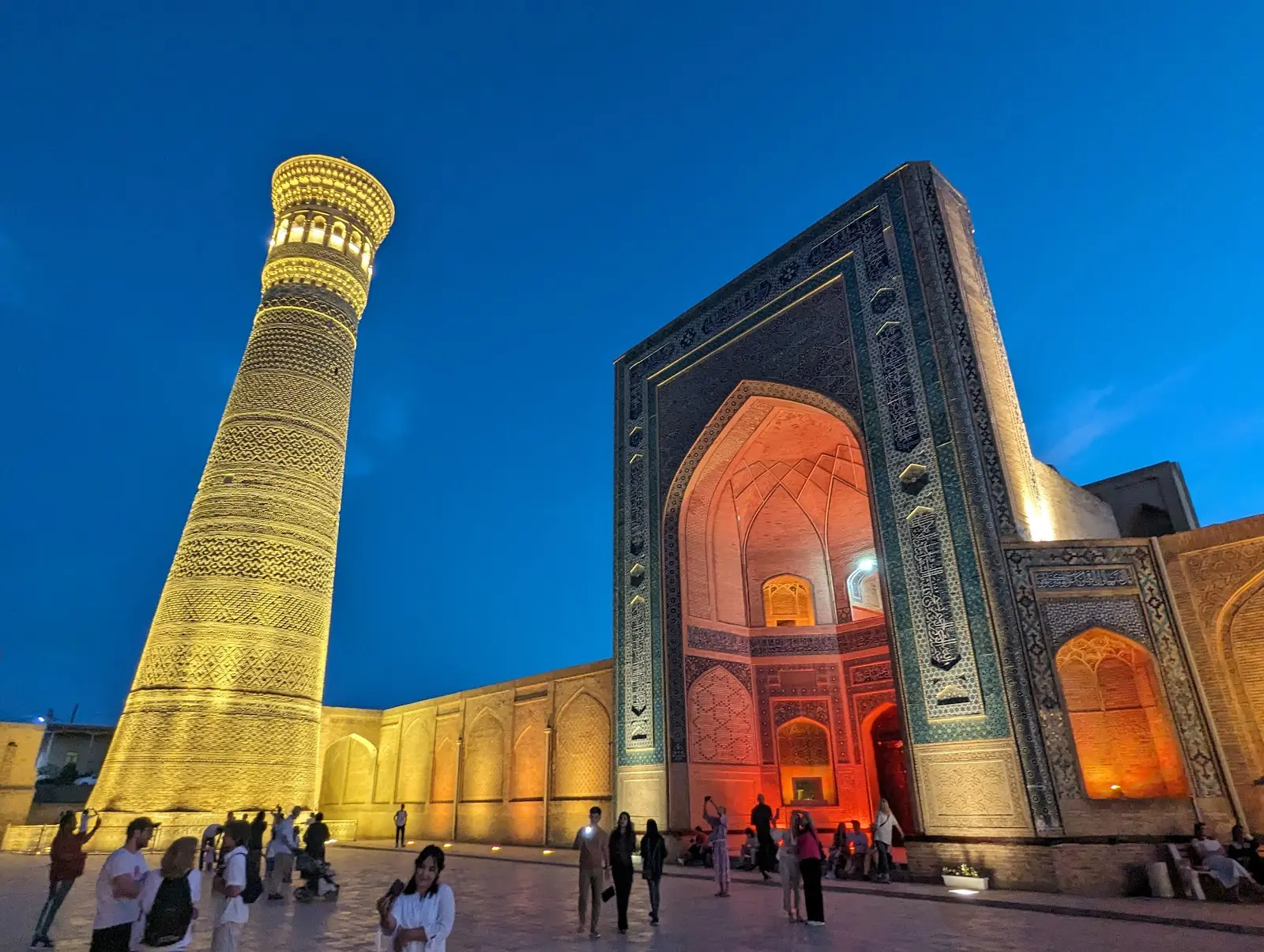
Poi-Kalyan Complex
The defining architectural symbol of Bukhara: the towering 48-meter Kalyan Minaret, the monumental Friday Mosque, and the active Mir-i-Arab Madrasa framing an awe-inspiring stone plaza.
A Tale of Two Dynasties and Eras
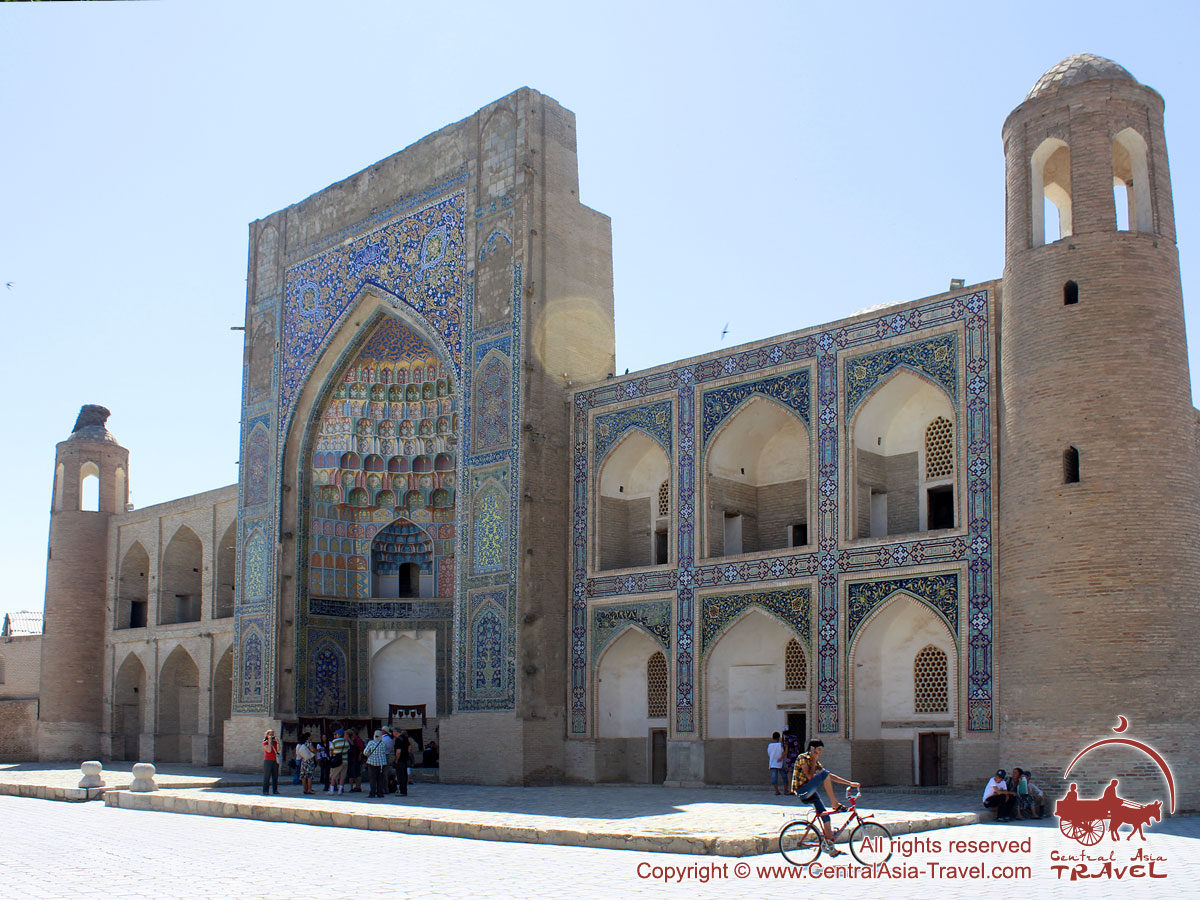
Facing each other across a narrow lane: the austere, scientific 15th-century madrasa of Ulugh Beg contrasted with the dazzling, flamboyant 17th-century palace-madrasa of Abdulaziz Khan.
Opposite each other
Paired Madrasas (Kosh Architectural Ensemble)
1417 (Ulugh Beg) & 1652 (Abdulaziz Khan)
Sultan Ulugh Beg (Timurid) & Abdulaziz Khan (Ashtarkhanid)
Higher scientific and theological education
1.5 hours
A stunning architectural comparison across two and a half centuries of Central Asian history. Two monumental madrasas stand face-to-face: Ulugh Beg’s building, focused on astronomy and mathematics, and Abdulaziz Khan’s opulent college, filled with colorful floral frescoes and Chinese dragon-inspired tiles.
Ulugh Beg built his college in 1417 (the oldest of his three madrasas, predating the ones in Samarkand and Gijduvan). Abdulaziz Khan constructed his rival masterpiece across the lane in 1652.
Ulugh Beg sought to establish Bukhara as a center of scientific inquiry, inscribing over the entrance: 'The pursuit of knowledge is the duty of every Muslim.' Abdulaziz Khan wanted to showcase his empire’s immense wealth and artistic sophistication.
Both functioned as universities where elite scholars lived in perimeter rooms, debated astronomy, Islamic law, Arabic grammar, and medicine under leading masters.
An engaging chronological story of how this monument survived invasions, earthquakes, and civilizational shifts.
Abdulaziz Khan’s madrasa was never completely finished because a military coup deposed the Khan while artisans were still carving the left wing of the entrance portal, leaving the bare brick exposed in fascinating contrast to the gilded right portal.
What to observe when standing before this monument or workshop.
The contrast is striking: Ulugh Beg's portal is disciplined, decorated with geometric ten-pointed star majolica tiles symbolizing astronomy. Abdulaziz Khan's portal explodes with color, including rare yellow and green glazes, hanging stalactite vaults (muqarnas), and depictions of the mythical Simurgh bird.
Sensory activities specifically relevant to this site.
Compare the fully carved gilded right side of Abdulaziz Khan's portal with the raw brick left side.
View the carved wooden door inscribed with Ulugh Beg’s famous declaration on education.
Walk into Abdulaziz Khan's winter mosque to see Chinese-influenced landscape paintings.
The historical, spiritual, or trade insights that deepen your understanding of Central Asia.
How the intellectual restraint of the Timurid era gave way to the theatrical luxury of the Ashtarkhanid dynasty.
How students lived for up to fifteen years in simple vaulted brick cells studying rigorous multi-disciplinary curricula.
Teahouses, spice shops, artisan stalls, and quiet courtyards in the surrounding mahallas.
Located just a few steps north of Toqi Zargaron. Surrounding courtyards house fine woodcarving and miniature painting workshops.
Explore other regional landmarks that share historical or geographic connections with this site.
The Spiritual CityThe defining architectural symbol of Bukhara: the towering 48-meter Kalyan Minaret, the monumental Friday Mosque, and the active Mir-i-Arab Madrasa framing an awe-inspiring stone plaza.
 The City of Merchants
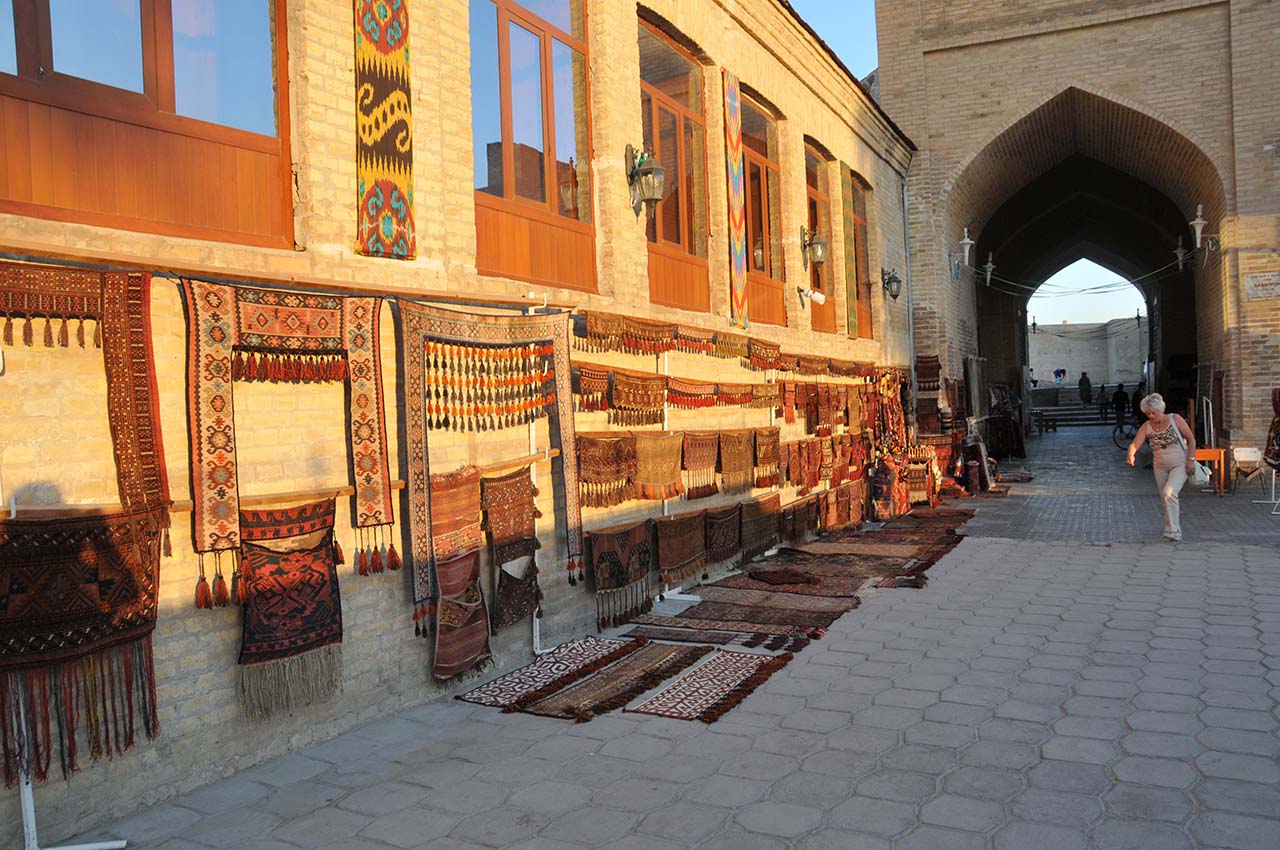
Three surviving multi-domed 16th-century crossroads (Toqi Zargaron, Toqi Telpak Furushon, Toqi Sarrofon) where caravans once bartered silk, gems, and currency.
Looking for something beyond this monument? Discover a completely different historical, merchant, or craft dimension.
The defining architectural symbol of Bukhara: the towering 48-meter Kalyan Minaret, the monumental Friday Mosque, and the active Mir-i-Arab Madrasa framing an awe-inspiring stone plaza.
A massive 5th-century fortress rising like an earthen mountain in the center of Bukhara, from which the rulers of the Emirate governed their desert empire.
.jpg)
Include this historic landmark in a private or small-group journey connecting ancient Silk Road trading cities with Nuratau Mountain homestays.