
 The City of Rulers
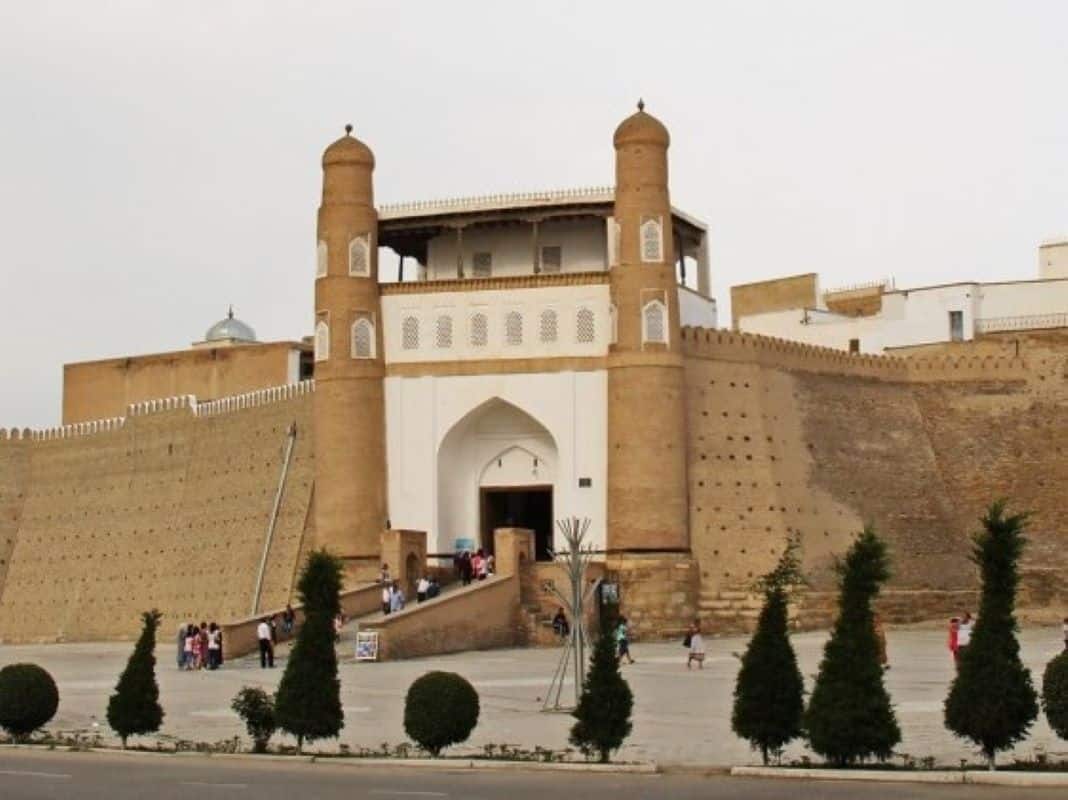
The Ark of Bukhara
A massive 5th-century fortress rising like an earthen mountain in the center of Bukhara, from which the rulers of the Emirate governed their desert empire.
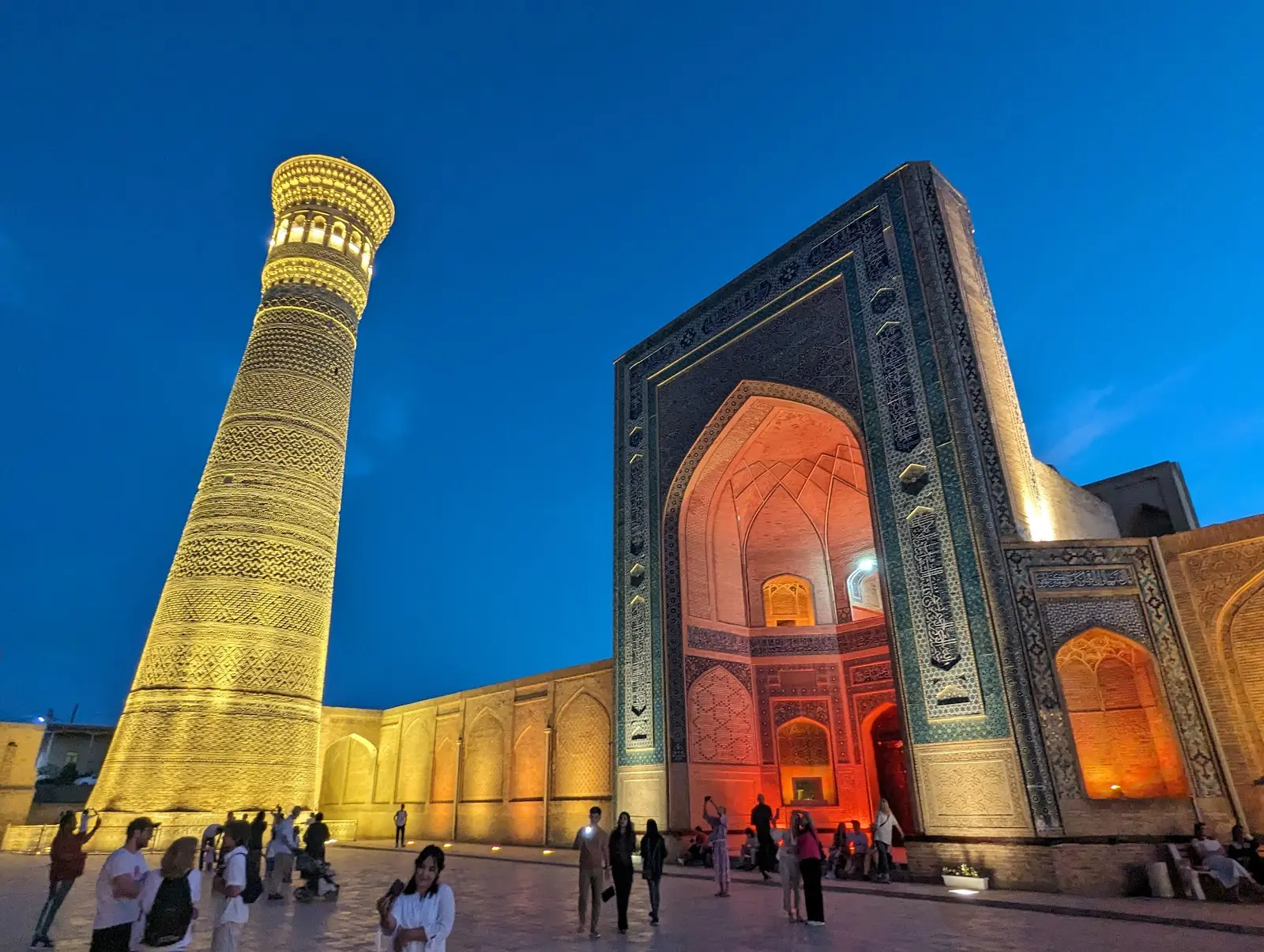
The Monumental Spiritual Heart of Bukhara
The defining architectural symbol of Bukhara: the towering 48-meter Kalyan Minaret, the monumental Friday Mosque, and the active Mir-i-Arab Madrasa framing an awe-inspiring stone plaza.
Bukhara Old Town (Registan plaza)
Architectural
1127 (Minaret) – 1536 CE (Madrasa)
Arslan Khan (Karakhanid)
Congregational Friday worship
2.5 – 3 hours
Poi-Kalyan (meaning 'The Foot of the Great') is the majestic religious square at the center of historic Bukhara. It unites three architectural titans: the colossal Kalyan Minaret (1127 CE), the vast Kalyan Mosque accommodating 12,000 worshippers, and the turquoise-domed Mir-i-Arab Madrasa, which has educated Islamic scholars for five centuries.
The Kalyan Minaret was completed in 1127 by the Karakhanid ruler Arslan Khan. The current Kalyan Mosque was reconstructed in 1514 on ancient foundations, and the facing Mir-i-Arab Madrasa was finished in 1536 under the Shaybanid dynasty.
Built by Karakhanid and Shaybanid rulers to provide a spiritual and civic nexus for the entire oasis. When Genghis Khan devastated Bukhara in 1220, he was so awed by the beauty and towering scale of the Kalyan Minaret that he ordered it spared from destruction.
The center of urban religious life: the minaret functioned as a call-to-prayer tower, military lookout, and Silk Road beacon visible for leagues across the desert. The mosque hosted weekly Friday prayers, while the madrasa was Central Asia’s premier theological college.
An engaging chronological story of how this monument survived invasions, earthquakes, and civilizational shifts.
For centuries, camel caravans crossing the Kyzylkum desert looked for the light burning atop the Kalyan Minaret at night to guide them toward safety. During Soviet times, Mir-i-Arab was one of only two active Islamic seminaries allowed to operate in the entire USSR, preserving theological scholarship through decades of state atheism.
What to observe when standing before this monument or workshop.
The minaret stands 45.6 meters high, built entirely of baked clay bricks arranged in fourteen distinct decorative geometric friezes without a single shard of colored glaze. Inside the Kalyan Mosque, 288 shallow brick domes rest upon 208 monumental pillars surrounding an immense open courtyard.
Sensory activities specifically relevant to this site.
Stand between the portal of Kalyan Mosque and Mir-i-Arab to appreciate the monumental balance of proportions.
Study the intricate light-and-shadow relief bands woven into the cylindrical shaft of the minaret.
Experience the tranquil courtyard at sunset when the baked brick glows warm amber.
Learn about the five centuries of Islamic jurisprudence taught within Mir-i-Arab’s dormitories.
The historical, spiritual, or trade insights that deepen your understanding of Central Asia.
How medieval engineers formulated reed-and-egg white mortars so resilient the minaret has withstood 900 years of earthquakes.
The traditional Central Asian principle of aligning two monumental structures facing each other along a central axis.
Teahouses, spice shops, artisan stalls, and quiet courtyards in the surrounding mahallas.
Step directly eastward into the covered market of Toqi Zargaron (Jewelers' Dome), or sip saffron tea at the shaded rooftop cafes overlooking the complex.
Explore other regional landmarks that share historical or geographic connections with this site.
The City of RulersA massive 5th-century fortress rising like an earthen mountain in the center of Bukhara, from which the rulers of the Emirate governed their desert empire.
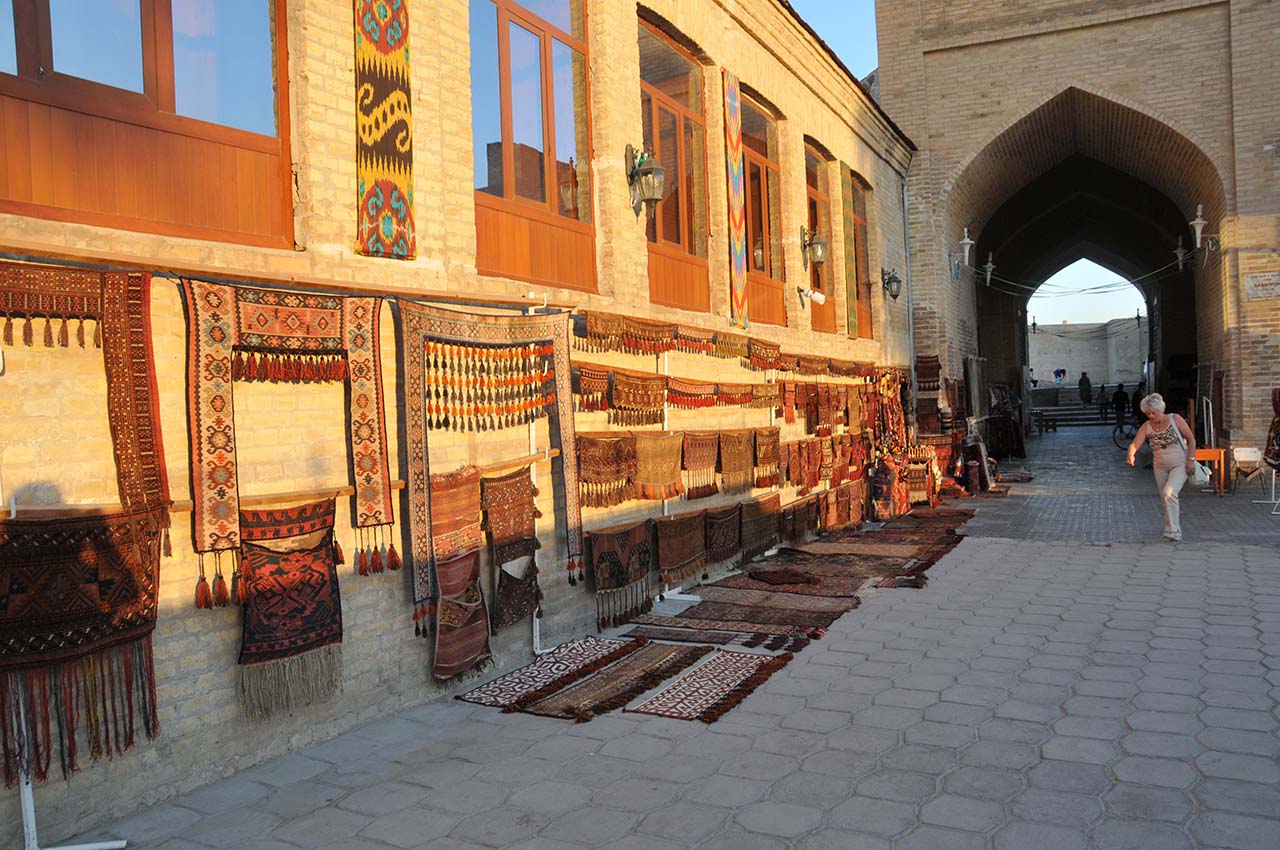 The City of Merchants
Three surviving multi-domed 16th-century crossroads (Toqi Zargaron, Toqi Telpak Furushon, Toqi Sarrofon) where caravans once bartered silk, gems, and currency.
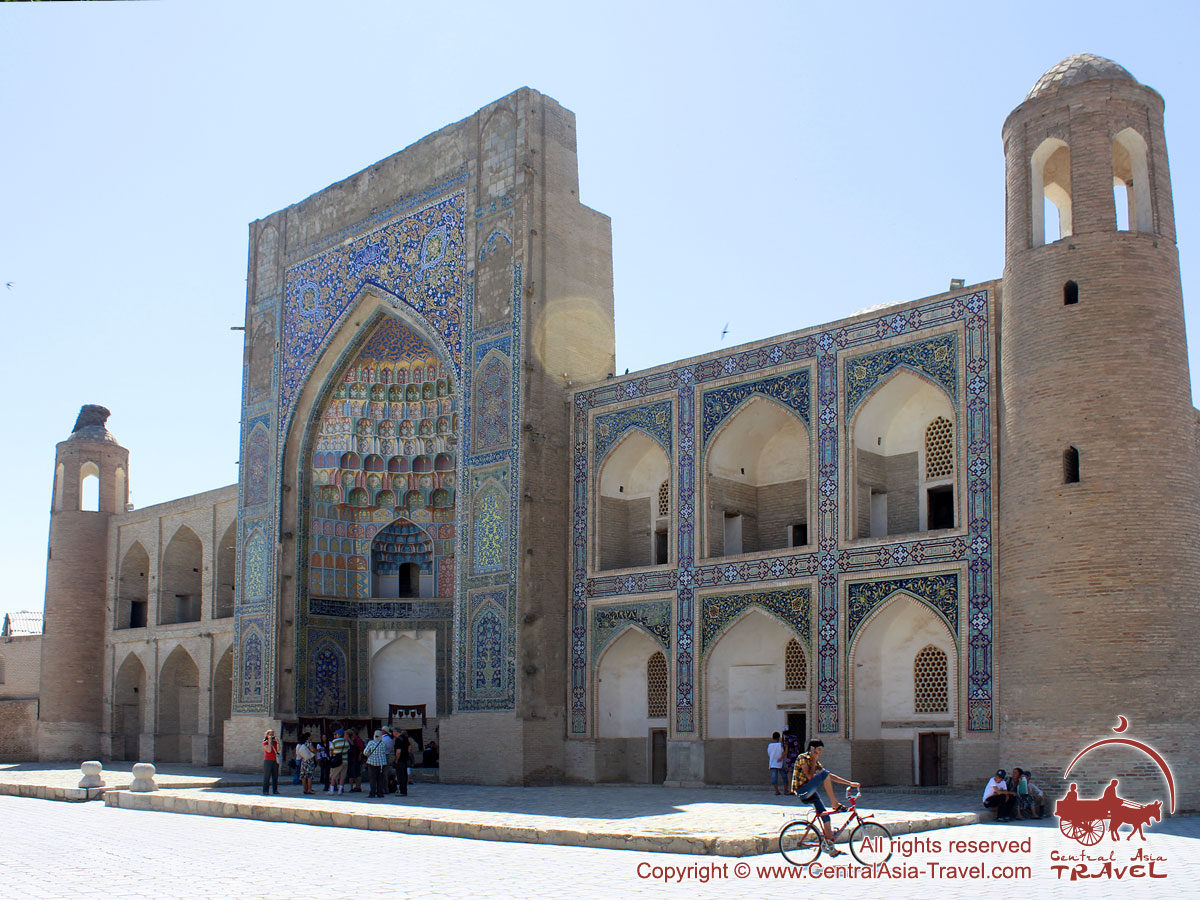 The City of Knowledge
Facing each other across a narrow lane: the austere, scientific 15th-century madrasa of Ulugh Beg contrasted with the dazzling, flamboyant 17th-century palace-madrasa of Abdulaziz Khan.
Looking for something beyond this monument? Discover a completely different historical, merchant, or craft dimension.
A massive 5th-century fortress rising like an earthen mountain in the center of Bukhara, from which the rulers of the Emirate governed their desert empire.
Bukhara’s most atmospheric open-air gathering place: a tranquil 17th-century stone pond shaded by centuries-old mulberry trees and framed by monumental madrasas.
.jpg)
Include this historic landmark in a private or small-group journey connecting ancient Silk Road trading cities with Nuratau Mountain homestays.