
 The City of Knowledge
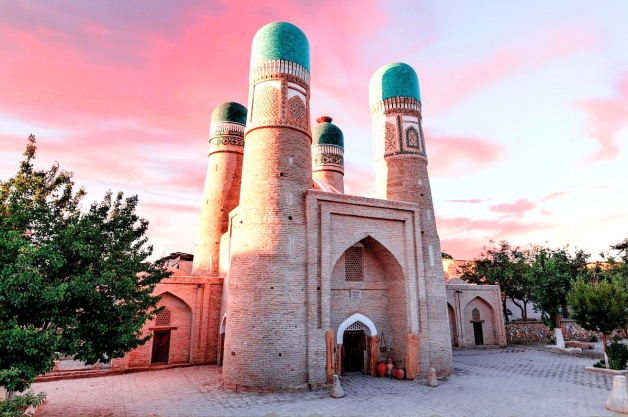
Chor Minor
One of Bukhara’s most photogenic and curious structures: a compact gatehouse crowned by four turquoise-domed minarets, each decorated with distinct motifs.
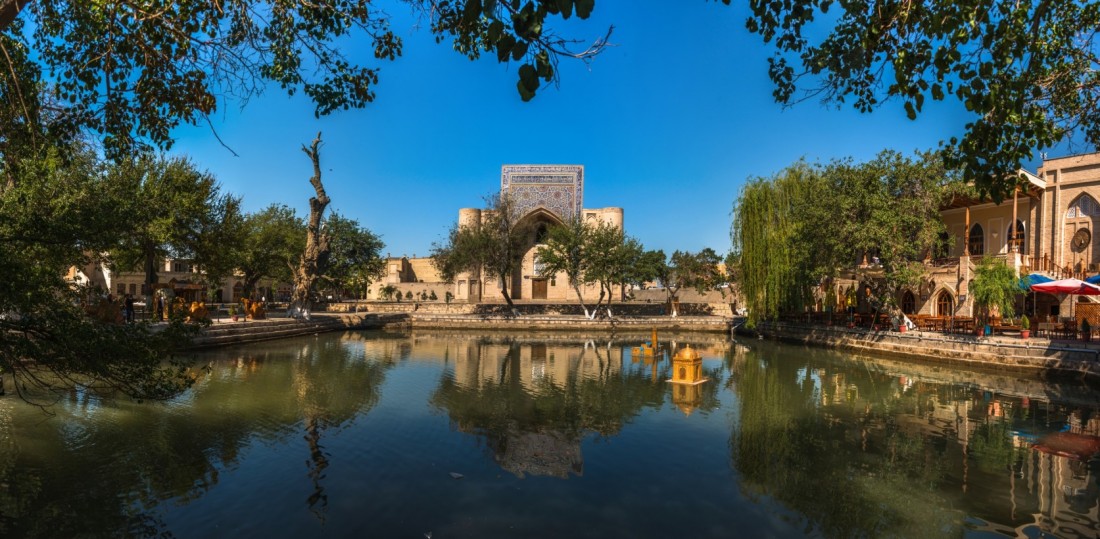
The Living Soul Around the Historic Reservoir
Bukhara’s most atmospheric open-air gathering place: a tranquil 17th-century stone pond shaded by centuries-old mulberry trees and framed by monumental madrasas.
South-Central Bukhara Old Town
Public Water Reservoir
1568 – 1622 CE
Nadir Divan-begi (Grand Vizier of Imam Quli Khan)
Urban water reservoir
1.5 – 2 hours (ideal in late afternoon / evening)
Lyabi-Hauz (literally 'By the Pond') is the beloved social heart of old Bukhara. A large rectangular stone-lined pool constructed in 1620, it is framed by three grand monuments: the Kukeldash Madrasa (Central Asia’s largest college), the Nadir Divan-begi Khanaka, and the Nadir Divan-begi Madrasa with its famous mythical simurgh bird mosaics.
The Kukeldash Madrasa was built in 1568. Half a century later, between 1620 and 1622, royal minister Nadir Divan-begi excavated the stone pool and constructed the facing Sufi lodging house and madrasa.
Nadir Divan-begi, a wealthy vizier who sought to earn civic favor and religious prestige by creating an oasis of fresh water and scholarly community in the dense desert city.
A vital source of drinking water for the neighborhood (drawn by water carriers called meshkob), alongside student accommodation, public debate, and accommodation for wandering Sufi dervishes.
An engaging chronological story of how this monument survived invasions, earthquakes, and civilizational shifts.
Historically, Bukhara possessed over two hundred open stone ponds (hauz), but because stagnant water spread cholera and guinea worm disease, Soviet sanitation authorities filled in almost all of them in the 1920s. Lyabi-Hauz was preserved because of its magnificent architectural ensemble.
What to observe when standing before this monument or workshop.
The pond measures 42 by 36 meters and is stepped down with beveled limestone blocks. Look closely at the Nadir Divan-begi Madrasa portal: instead of orthodox abstract geometric motifs, it features two vibrant azure peacocks/simurgh birds flying toward a radiant solar disk with a human face.
Sensory activities specifically relevant to this site.
Sit on a cushioned wooden chorpoy platform sipping green tea with lemon, cardamom, and local sweets.
Rub the bronze stirrup of the famous folk philosopher sitting on his donkey for good travel fortune.
Admire the rare figurative ceramic art depicting mythical birds on the madrasa portal.
The historical, spiritual, or trade insights that deepen your understanding of Central Asia.
How ancient Shakhrud canal systems channeled river snowmelt from the Zeravshan to sustain an urban population of 100,000.
The historic proximity of the old Jewish quarter and the diverse merchant communities of the 17th century.
Teahouses, spice shops, artisan stalls, and quiet courtyards in the surrounding mahallas.
Stroll 2 minutes into the historic Jewish Quarter to visit the 400-year-old active Bukharian Synagogue, or browse handmade carpets in the adjoining caravanserais.
Explore other regional landmarks that share historical or geographic connections with this site.
The City of KnowledgeOne of Bukhara’s most photogenic and curious structures: a compact gatehouse crowned by four turquoise-domed minarets, each decorated with distinct motifs.
 The Spiritual City
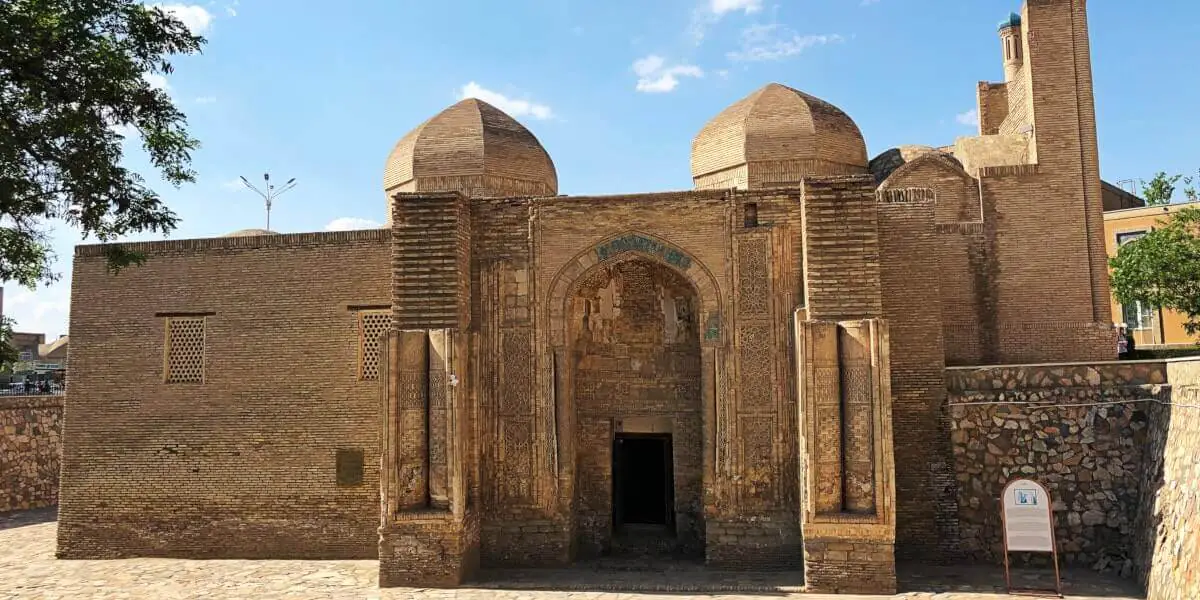
The oldest surviving mosque in Central Asia, standing 4.5 meters below modern street level on the site of a pre-Islamic Zoroastrian Moon Temple.
 The City of Merchants
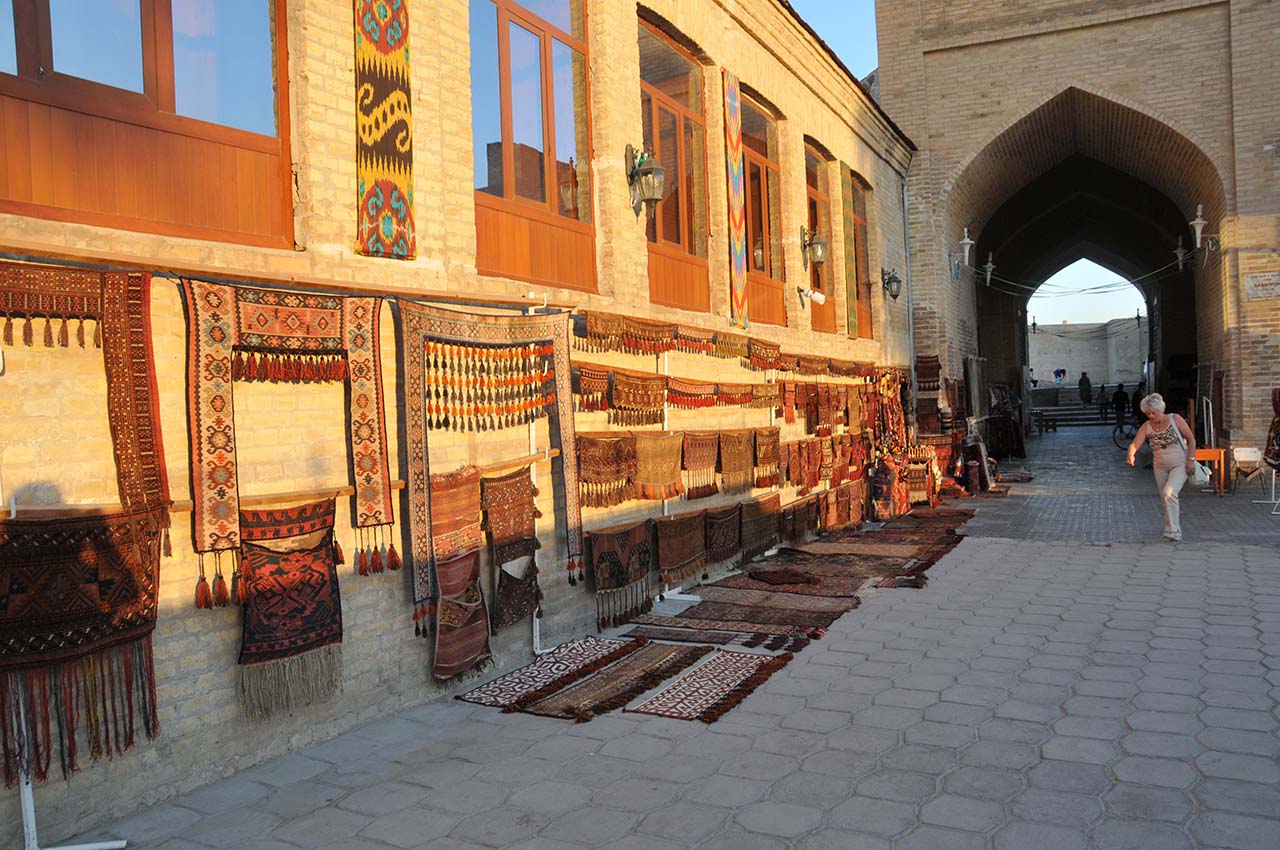
Three surviving multi-domed 16th-century crossroads (Toqi Zargaron, Toqi Telpak Furushon, Toqi Sarrofon) where caravans once bartered silk, gems, and currency.
Looking for something beyond this monument? Discover a completely different historical, merchant, or craft dimension.
The defining architectural symbol of Bukhara: the towering 48-meter Kalyan Minaret, the monumental Friday Mosque, and the active Mir-i-Arab Madrasa framing an awe-inspiring stone plaza.
A massive 5th-century fortress rising like an earthen mountain in the center of Bukhara, from which the rulers of the Emirate governed their desert empire.
.jpg)
Include this historic landmark in a private or small-group journey connecting ancient Silk Road trading cities with Nuratau Mountain homestays.