
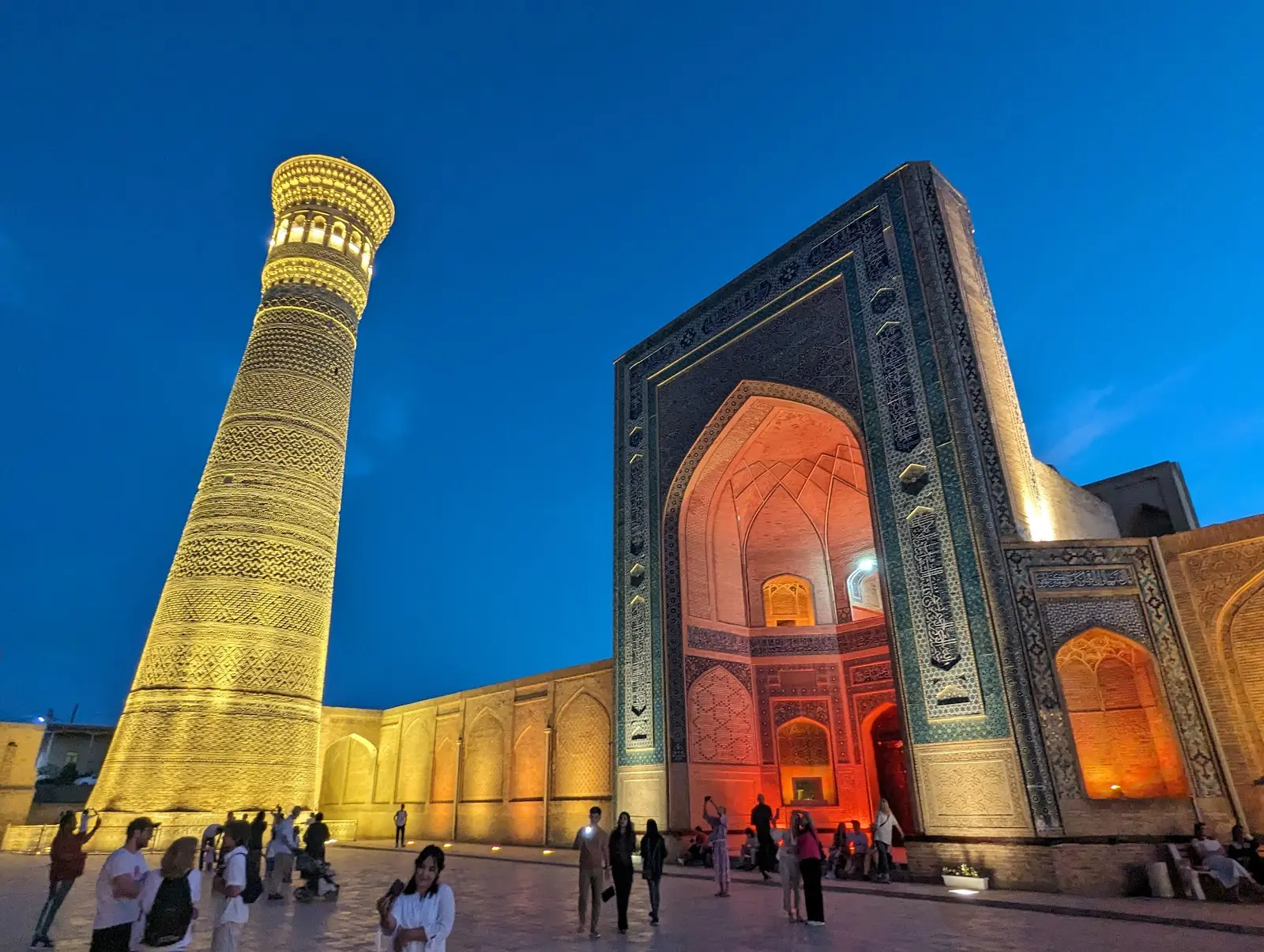
 The Spiritual City
Poi-Kalyan Complex
The defining architectural symbol of Bukhara: the towering 48-meter Kalyan Minaret, the monumental Friday Mosque, and the active Mir-i-Arab Madrasa framing an awe-inspiring stone plaza.
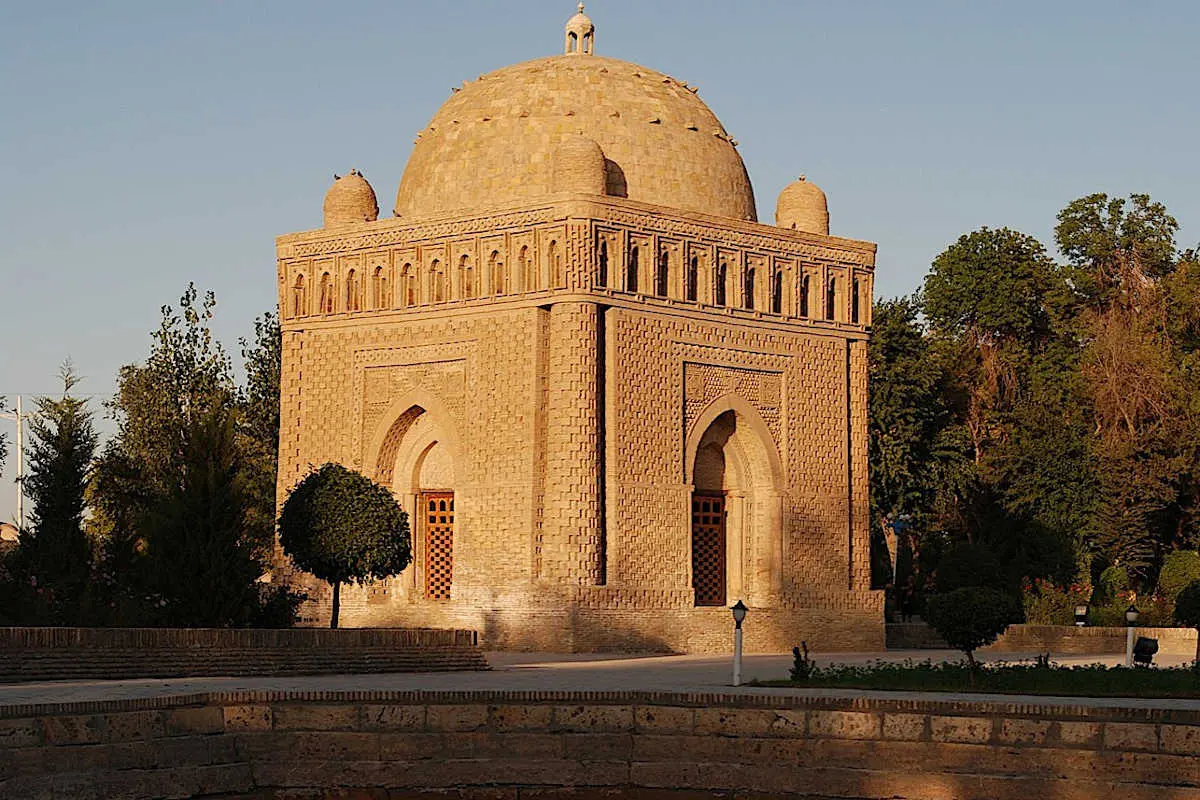
A Masterpiece of Early Islamic Baked Brick
A jewel of 9th-century architecture: a cube of woven baked clay brickwork that survived Genghis Khan because it lay buried beneath desert silt for centuries.
Samanid Recreation Park
Dynastic Tomb
892 – 943 CE
Ismail Samani (Founder of the Persian Samanid Dynasty)
Dynastic family mausoleum for the Samanid rulers
1 hour
The Samanid Mausoleum is the oldest surviving Islamic monument in Central Asia. Constructed entirely of unglazed ochre brick, it is a perfect cube topped by a hemispherical dome, celebrated worldwide for the geometric virtuosity of its basket-weave brick masonry.
Erected between 892 and 943 CE as the burial chamber for Ismail Samani and his father Ahmad. It predates the Mongol invasion by more than three centuries.
Ismail Samani, the enlightened Persian ruler who made Bukhara a global intellectual beacon during the Persian Renaissance, commissioning a tomb that fused ancient Zoroastrian fire-temple geometry with Islamic funerary aesthetics.
A dynastic tomb honoring the Samanid monarchs, which famously broke early orthodox prohibitions against constructing monumental tombs over graves.
An engaging chronological story of how this monument survived invasions, earthquakes, and civilizational shifts.
When the Mongols razed Bukhara in 1220, floodwaters and drifting sandstorms buried the mausoleum up to its dome, turning it into a nondescript sandy mound. For seven hundred years it lay hidden and forgotten until Soviet archaeologist Vasily Shishkin excavated the site in 1934, discovering the 1,000-year-old masterpiece intact.
What to observe when standing before this monument or workshop.
No colored glazes are used; instead, ordinary fired bricks are laid in over twenty distinct patterns — diagonally, vertically, in stepped crosses, and curved arches — creating an optical basket-weave effect where the building appears to shift texture and color as sunlight moves across the sky.
Sensory activities specifically relevant to this site.
Walk slowly around the four identical facades noticing how shadow depth shifts with the sun.
Observe the architectural transition from cubic earth to hemispherical heaven via squinch arches.
Stroll the surrounding tranquil gardens, old defensive earthworks, and nearby Chashma-Ayub well.
The historical, spiritual, or trade insights that deepen your understanding of Central Asia.
How the Samanids invented structural decorative brickwork that later inspired Seljuk, Persian, and Mughal monuments.
Bukhara's 10th-century golden age as the literary and scientific capital of poets Rudaki and Ferdowsi.
Teahouses, spice shops, artisan stalls, and quiet courtyards in the surrounding mahallas.
Directly next door is the conical-roofed Chashma-Ayub Mausoleum (Spring of Job) and the bustling local food market of Kolkhoz Bazaar.
Explore other regional landmarks that share historical or geographic connections with this site.
The Spiritual CityThe defining architectural symbol of Bukhara: the towering 48-meter Kalyan Minaret, the monumental Friday Mosque, and the active Mir-i-Arab Madrasa framing an awe-inspiring stone plaza.
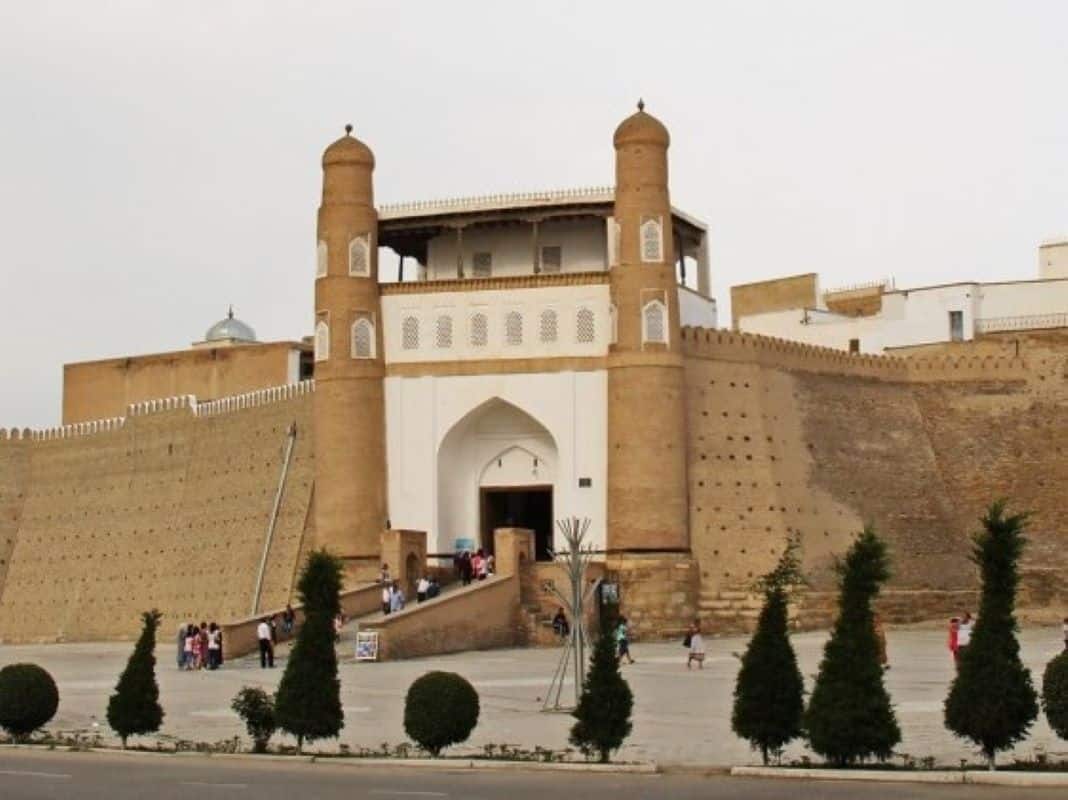 The City of Rulers
A massive 5th-century fortress rising like an earthen mountain in the center of Bukhara, from which the rulers of the Emirate governed their desert empire.
Looking for something beyond this monument? Discover a completely different historical, merchant, or craft dimension.
A massive 5th-century fortress rising like an earthen mountain in the center of Bukhara, from which the rulers of the Emirate governed their desert empire.
Bukhara’s most atmospheric open-air gathering place: a tranquil 17th-century stone pond shaded by centuries-old mulberry trees and framed by monumental madrasas.
.jpg)
Include this historic landmark in a private or small-group journey connecting ancient Silk Road trading cities with Nuratau Mountain homestays.