
 The City of Merchants
Lyabi-Hauz Ensemble
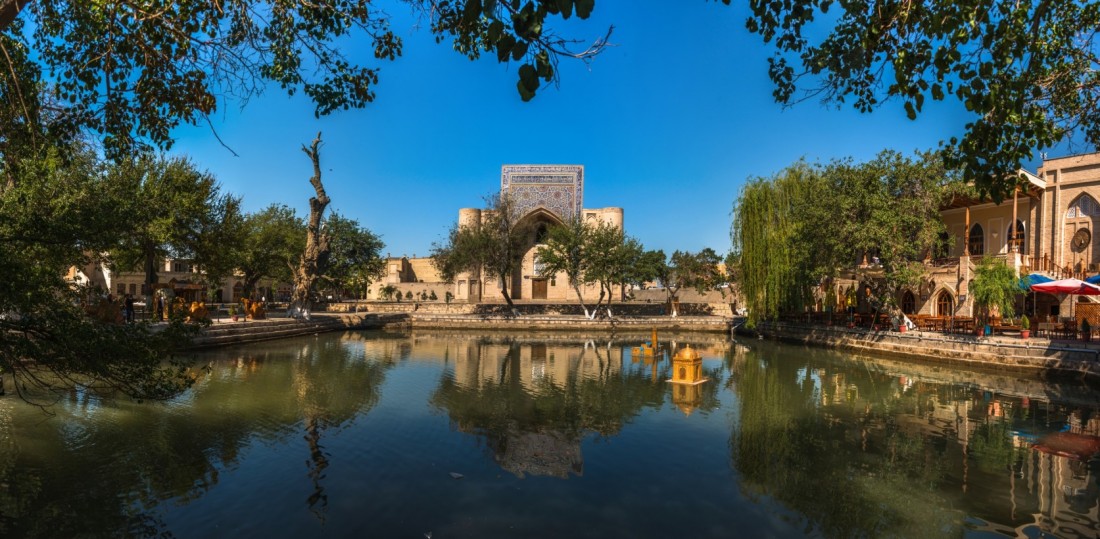
Bukhara’s most atmospheric open-air gathering place: a tranquil 17th-century stone pond shaded by centuries-old mulberry trees and framed by monumental madrasas.
The Charming Madrasa of Four Towers
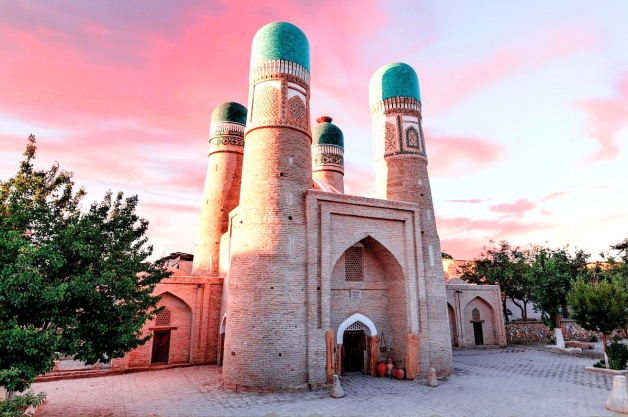
One of Bukhara’s most photogenic and curious structures: a compact gatehouse crowned by four turquoise-domed minarets, each decorated with distinct motifs.
Quiet residential mahalla northeast of Lyabi-Hauz
Madrasa Gatehouse (Darvazakhana)
1807 CE
Khalif Niyaz-kul (Wealthy merchant of Turkmen origin)
Entrance gatehouse and library for a neighborhood madrasa
45 minutes
Chor Minor (Persian for 'Four Minarets') is a delightful and unique historic gatehouse tucked inside a quiet residential neighborhood. It features four corner towers topped with turquoise cupolas, each exhibiting unique decorative brick and tile motifs.
Constructed in 1807 by a wealthy merchant named Khalif Niyaz-kul as the ceremonial gatehouse for a now-vanished 59-cell madrasa complex.
Built by Khalif Niyaz-kul following his travels along the Silk Road, intending to create a monument that symbolized harmony between diverse regional cultures.
The ground floor served as a vestibule with an open domed entrance hall, while the upper floor housed a tranquil study library accessible by a narrow spiral brick stairway.
An engaging chronological story of how this monument survived invasions, earthquakes, and civilizational shifts.
Unlike standard Bukhara madrasas with towering rectangular portals, Chor Minor was deliberately whimsical. Local architectural lore suggests that the decorative carvings on each of the four towers represent symbols of four great world religions: Christianity, Islam, Buddhism, and Zoroastrianism.
What to observe when standing before this monument or workshop.
The towers are not functional minarets (there are no balconies for the muezzin); rather, they are decorative turrets covered in sky-blue tiles, chevron brickwork, and floral ceramic bands.
Sensory activities specifically relevant to this site.
Photograph the blue towers framed against neighborhood mulberry trees and clay brick homes.
Walk the peaceful, winding mudbrick lanes of the surrounding residential quarter.
Browse antique textiles and local ceramics inside the ground-floor gatekeeper shop.
The historical, spiritual, or trade insights that deepen your understanding of Central Asia.
How wealthy Silk Road traders used private fortunes to build neighborhood schools and social infrastructure.
The traditional community layout where houses cluster inward around courtyards and mosques.
Teahouses, spice shops, artisan stalls, and quiet courtyards in the surrounding mahallas.
A 10-minute quiet walk through residential alleys returns you to Lyabi-Hauz. You’ll pass artisan workshops carving wooden bookstands (lauh).
Explore other regional landmarks that share historical or geographic connections with this site.
The City of MerchantsBukhara’s most atmospheric open-air gathering place: a tranquil 17th-century stone pond shaded by centuries-old mulberry trees and framed by monumental madrasas.
 The City of Merchants
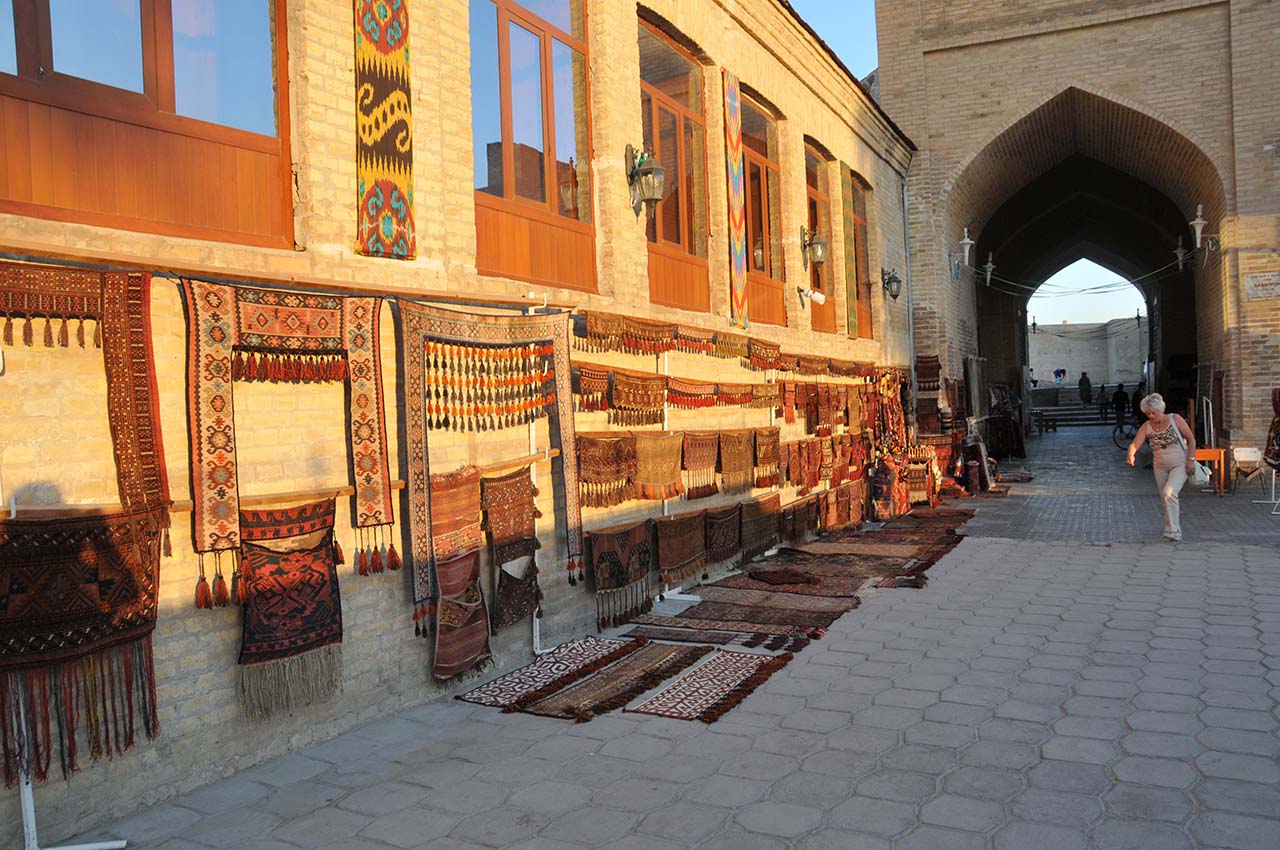
Three surviving multi-domed 16th-century crossroads (Toqi Zargaron, Toqi Telpak Furushon, Toqi Sarrofon) where caravans once bartered silk, gems, and currency.
Looking for something beyond this monument? Discover a completely different historical, merchant, or craft dimension.
The defining architectural symbol of Bukhara: the towering 48-meter Kalyan Minaret, the monumental Friday Mosque, and the active Mir-i-Arab Madrasa framing an awe-inspiring stone plaza.
A massive 5th-century fortress rising like an earthen mountain in the center of Bukhara, from which the rulers of the Emirate governed their desert empire.
.jpg)
Include this historic landmark in a private or small-group journey connecting ancient Silk Road trading cities with Nuratau Mountain homestays.