
 The Spiritual City
Poi-Kalyan Complex
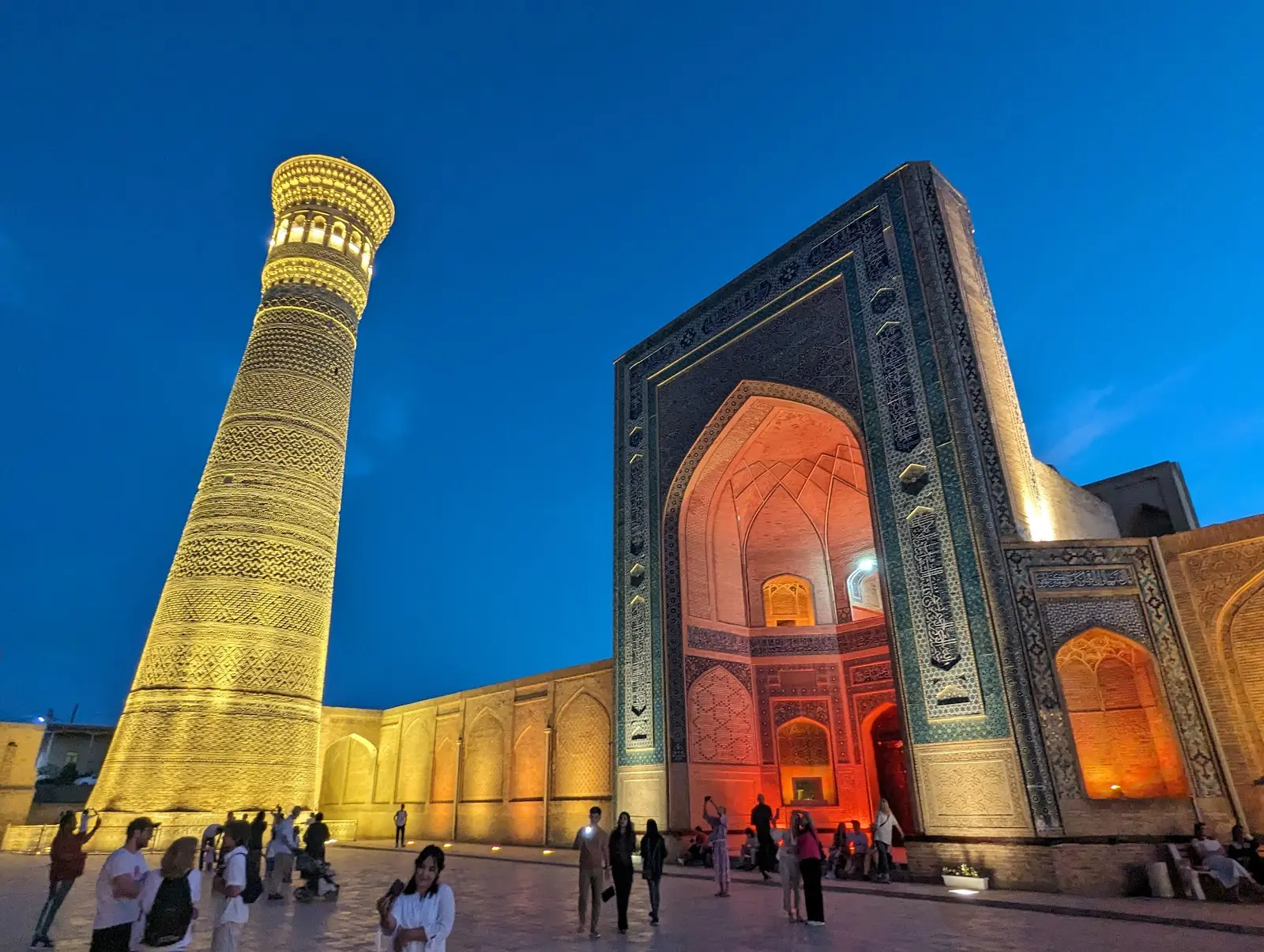
The defining architectural symbol of Bukhara: the towering 48-meter Kalyan Minaret, the monumental Friday Mosque, and the active Mir-i-Arab Madrasa framing an awe-inspiring stone plaza.
The Ancient Citadel of the Emirs
A massive 5th-century fortress rising like an earthen mountain in the center of Bukhara, from which the rulers of the Emirate governed their desert empire.
Opposite the Registan public square
Ancient Royal Citadel
Earliest foundations 5th Century CE; rebuilt across eras
Ancient rulers of Bukhara; later expanded by the Manghit Emirs
Royal residence
2 hours
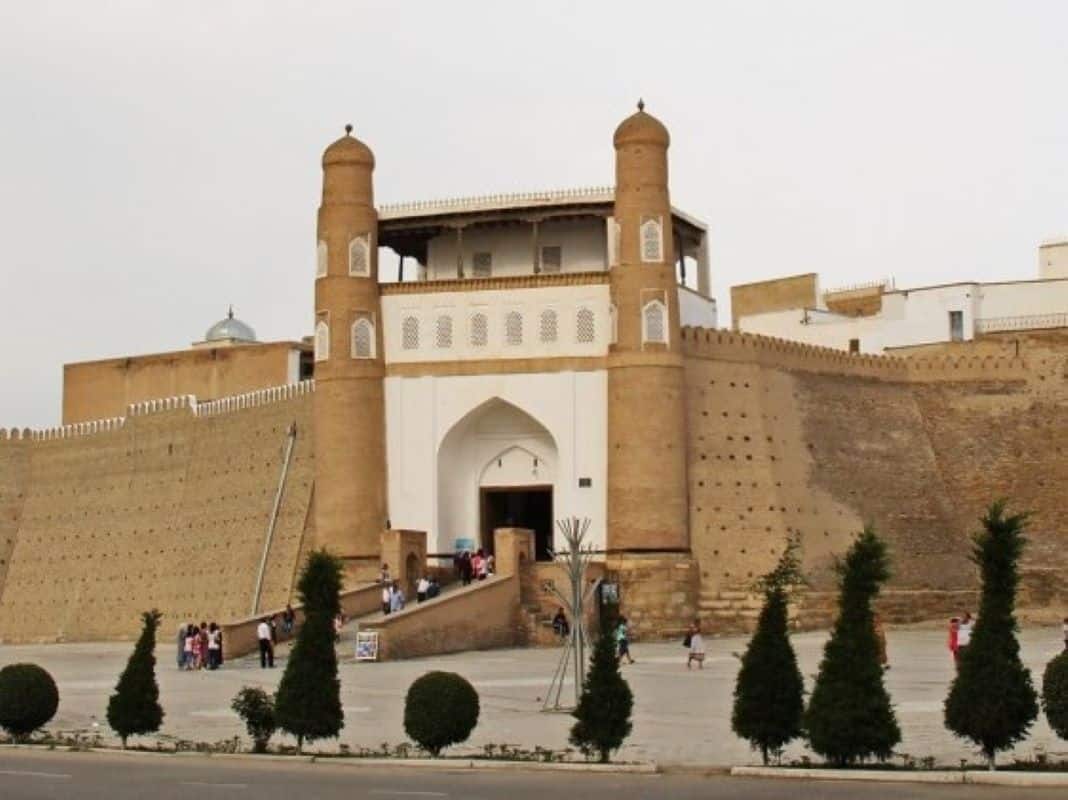
The Ark is a city within a city: an immense fortress perched atop an artificial earthen mound covering nearly four hectares. Surrounded by 20-meter-high curved bastions, it housed the Emir's palace, coronation throne room, state treasury, royal stables, mint, and the infamous Zindan underground dungeons.
Legend attributes its founding to the epic hero Siyavush in the 1st millennium BCE. Archaeological evidence confirms a fortified royal residence by the 5th century CE. It was repeatedly destroyed by conquerors (including Genghis Khan) and rebuilt by successive dynasties.
Constructed by the sovereign rulers of Bukhara to project unassailable military dominance over the oasis and protect the monarch, court, and state apparatus from foreign sieges and urban rebellions.
The absolute nerve center of the Bukhara Emirate: it held the administrative offices of the Prime Minister (Kushbegi), the royal mint that struck gold tillas, judicial courts, and the open-air Coronation Court paved in stone.
An engaging chronological story of how this monument survived invasions, earthquakes, and civilizational shifts.
Within these walls in the 10th century, the young polymath Ibn Sina (Avicenna) cured the Samanid ruler of an illness and was rewarded with access to the royal library, describing it as containing volumes found nowhere else on earth. In the 19th century, the Ark was the dramatic stage of the 'Great Game' between the British and Russian empires.
What to observe when standing before this monument or workshop.
The entrance is flanked by two monumental 18th-century towers connected by an overhead gallery where the Emir's ceremonial nagora drum band played music during royal processions. Inside, the Throne Room features carved alabaster (ganch) and a marble coronation throne.
Sensory activities specifically relevant to this site.
Walk up the stone-paved ramp between towering curved mud walls with views over the city.
Stand in the open-air reception courtyard where the Emirs received British and Russian envoys.
Explore the state museums displaying royal coronation robes, gold saddles, and ancient coinage.
The historical, spiritual, or trade insights that deepen your understanding of Central Asia.
How the feudal administration of Central Asia operated prior to the 1920 Bolshevik revolution.
The geopolitical intrigue between Victorian Britain and Tsarist Russia that centered around Bukhara.
Teahouses, spice shops, artisan stalls, and quiet courtyards in the surrounding mahallas.
Across the square stands the exquisite 20-pillar Bolo Hauz Mosque (1712) with its towering carved walnut columns, and the picturesque Samanid Park.
Explore other regional landmarks that share historical or geographic connections with this site.
The Spiritual CityThe defining architectural symbol of Bukhara: the towering 48-meter Kalyan Minaret, the monumental Friday Mosque, and the active Mir-i-Arab Madrasa framing an awe-inspiring stone plaza.
 The Spiritual City
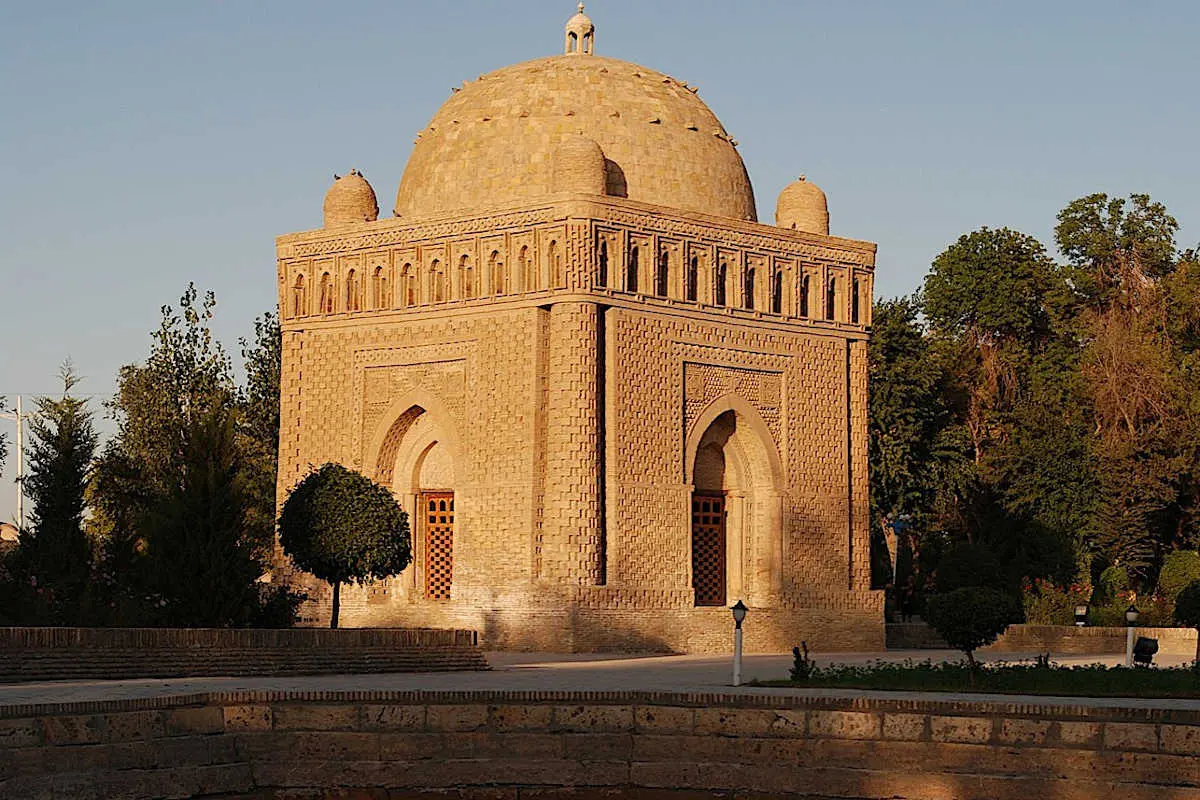
A jewel of 9th-century architecture: a cube of woven baked clay brickwork that survived Genghis Khan because it lay buried beneath desert silt for centuries.
 The City of Merchants
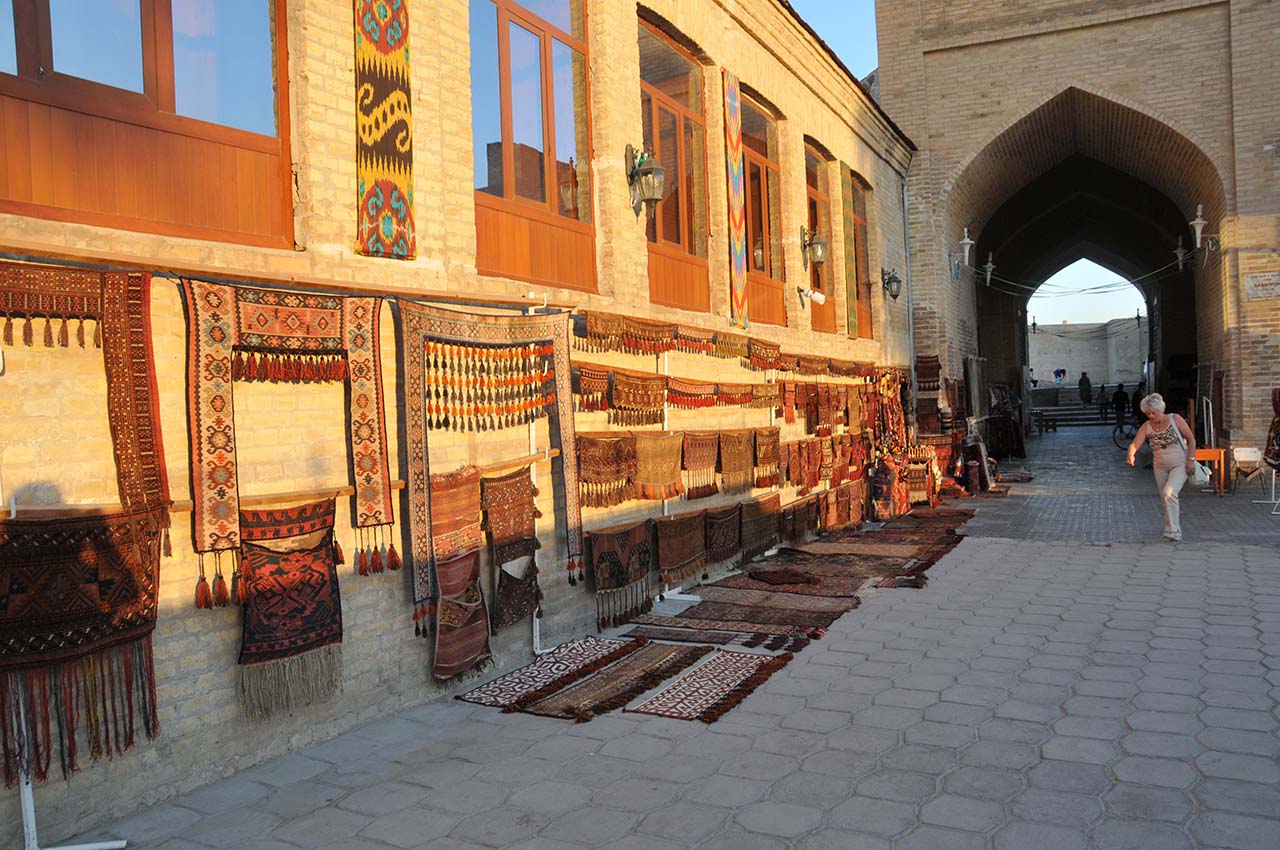
Three surviving multi-domed 16th-century crossroads (Toqi Zargaron, Toqi Telpak Furushon, Toqi Sarrofon) where caravans once bartered silk, gems, and currency.
Looking for something beyond this monument? Discover a completely different historical, merchant, or craft dimension.
The defining architectural symbol of Bukhara: the towering 48-meter Kalyan Minaret, the monumental Friday Mosque, and the active Mir-i-Arab Madrasa framing an awe-inspiring stone plaza.
Bukhara’s most atmospheric open-air gathering place: a tranquil 17th-century stone pond shaded by centuries-old mulberry trees and framed by monumental madrasas.
.jpg)
Include this historic landmark in a private or small-group journey connecting ancient Silk Road trading cities with Nuratau Mountain homestays.