
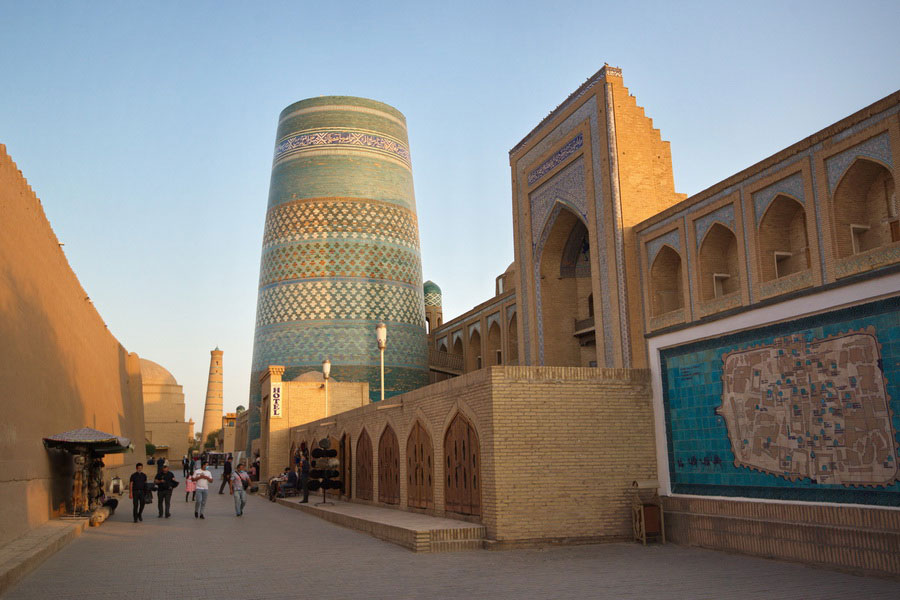
 Historic City & Walls
Kalta Minor Minaret
Khiva’s most iconic and photogenic landmark: a colossal, truncated minaret completely wrapped in gleaming azure, turquoise, and white ceramic tilework.
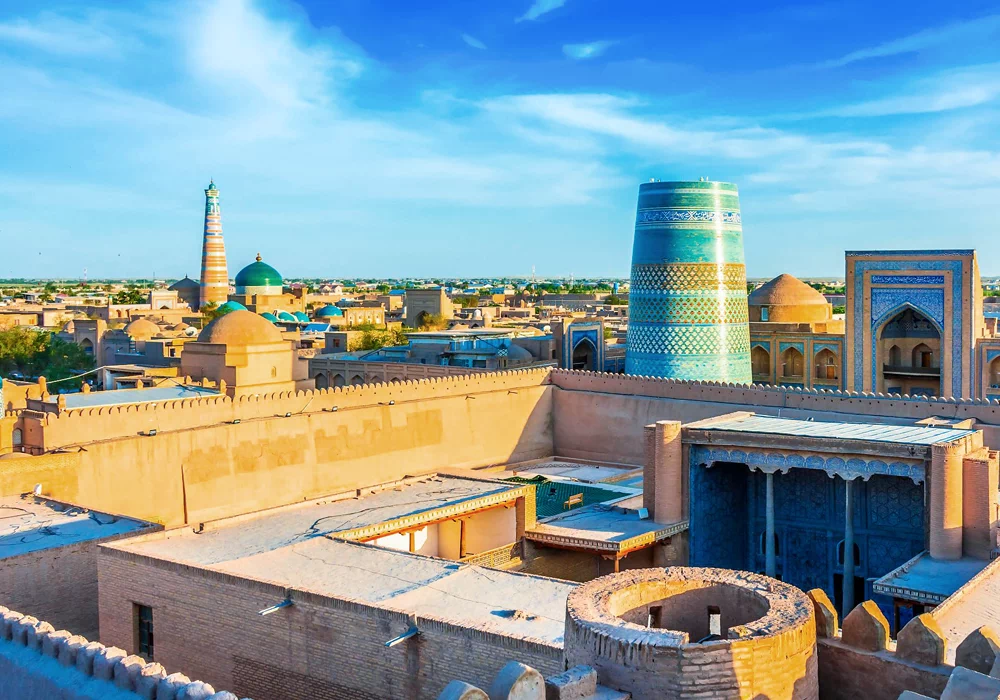
Central Asia's First UNESCO World Heritage Site
A completely intact medieval Silk Road city surrounded by two kilometers of undulating mud-brick walls, preserving over fifty historic monuments within a living pedestrian realm.
Heart of Khiva City
Walled Historic Urban Ensemble (UNESCO World Heritage)
Foundations 5th C. BCE; standing walls & monuments 16th – 19th C.
Ancient Khorezmian kings; later Khans of Khiva
Fortified inner city (Shahristan) housing court
Full day (minimum) to explore thoroughly
Ichan-Kala is the historic walled inner town of Khiva. Unlike modern cities with scattered monuments, Ichan-Kala is a living, fully enclosed open-air museum covering 26 hectares. Within its towering 10-meter-high clay walls lie palaces, mosques, madrasas, minarets, caravanserais, and traditional residential clay mahallas where local families still live.
According to archaeological evidence, settlements existed here as early as the 5th century BCE along ancient Silk Road water branches. The massive crenellated mud-brick walls seen today were reconstructed in the late 18th century after devastating nomadic raids, retaining their classic ancient Khorezmian defensive profile.
Constructed by the Khans of the Khiva Khanate (Kungrat dynasty) to create an impregnable desert citadel that protected the royal treasury, Islamic schools, and international trade caravans from desert bandits and foreign sieges.
The administrative, cultural, and spiritual core of the Khiva Khanate, surrounded by an outer walled town (Dishan-Kala). Within these gates, state decisions were proclaimed, international taxes collected, and hundreds of scholars educated.
An engaging narrative detailing how this monument evolved across Khorezm's golden ages, desert trade conflicts, and modern preservation.
In 1990, Ichan-Kala became the very first site in Central Asia inscribed onto the UNESCO World Heritage list. Its intact preservation is extraordinary: while modern developments altered other historic cities, Khiva's remote position between the Kyzylkum and Karakum deserts shielded its historic urban fabric from 20th-century industrial demolition.
Features you can see with your own eyes: carved elm columns, majolica friezes, adobe brick bonds, and acoustic domes.
The walls extend 2,250 meters in length, fortified with 40 massive semicircular clay bastions and four monumental gates: Ota Darvoza (West), Palvan Darvoza (East), Tash Darvoza (South), and Bagcha Darvoza (North). Inside, streets are paved in stone and buildings are constructed of sun-dried adobe brick ornamented with vivid turquoise, cobalt, and white majolica tiles.
Carefully selected activities genuinely relevant to this monument or quarter.
Wander through traffic-free stone lanes where every turn reveals a minaret or tiled archway.
Climb the clay city walls near North Gate for breathtaking golden-hour views across clay roofs.
Meet artisans carving fragrant elm wood, weaving silk carpets, and sewing sheepskin hats.
Experience the city late at night when the illuminated mud walls feel like an ancient Arabian tale.
Core educational takeaways that bring Khiva's Silk Road legacy into sharp perspective.
How Islamic urban spaces organically integrated defense, religious education, trade caravans, and domestic life.
The ingenious insulating properties of sun-dried mudbrick (pakhsa) keeping interiors cool in 45°C summer heat.
Courtyard teahouses, woodcarving studios, and quiet residential lanes right around this site.
Step outside the Western Gate to sample fresh Khorezm bread and hot skewers of grilled fish caught fresh from the nearby Amu Darya river channels.
Explore other walled landmarks and quarters connected with this site's history or walking circuit.
Historic City & WallsKhiva’s most iconic and photogenic landmark: a colossal, truncated minaret completely wrapped in gleaming azure, turquoise, and white ceramic tilework.
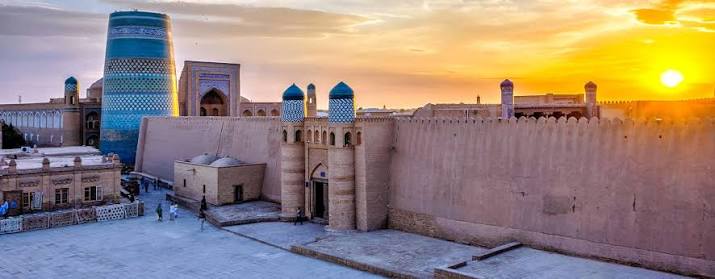 Royal Palaces & Fortresses
A fortified royal fortress-citadel within Ichan-Kala, housing the Khan's summer reception hall, mint, throne room, and the famous Ak-Sheikh Bobo watchtower.
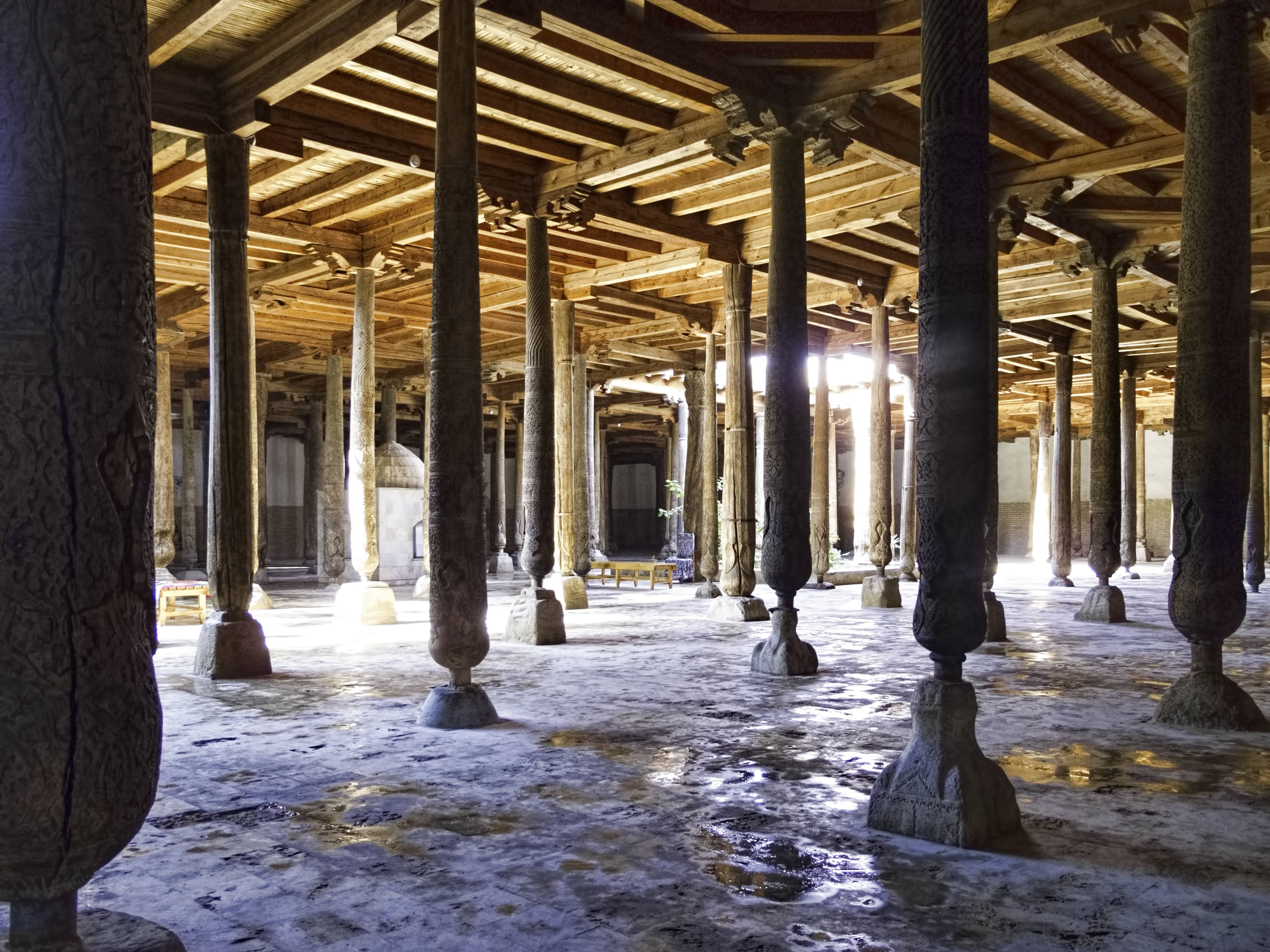 Sacred Mosques & Shrines
One of the most atmospheric religious spaces in Central Asia: an unadorned single-story hall supported by 218 uniquely carved antique wooden columns dating from the 10th to 18th centuries.
Looking for something beyond this monument? Discover royal fortresses, sacred woodcarvings, or Silk Road bazaar alleys.
A fortified royal fortress-citadel within Ichan-Kala, housing the Khan's summer reception hall, mint, throne room, and the famous Ak-Sheikh Bobo watchtower.
One of the most atmospheric religious spaces in Central Asia: an unadorned single-story hall supported by 218 uniquely carved antique wooden columns dating from the 10th to 18th centuries.
.jpg)
Experience Ichan-Kala, royal desert palaces, and ancient Silk Road trading chambers with expert Khorezm cultural guides and seamless logistics.