
 Sacred Mosques & Shrines
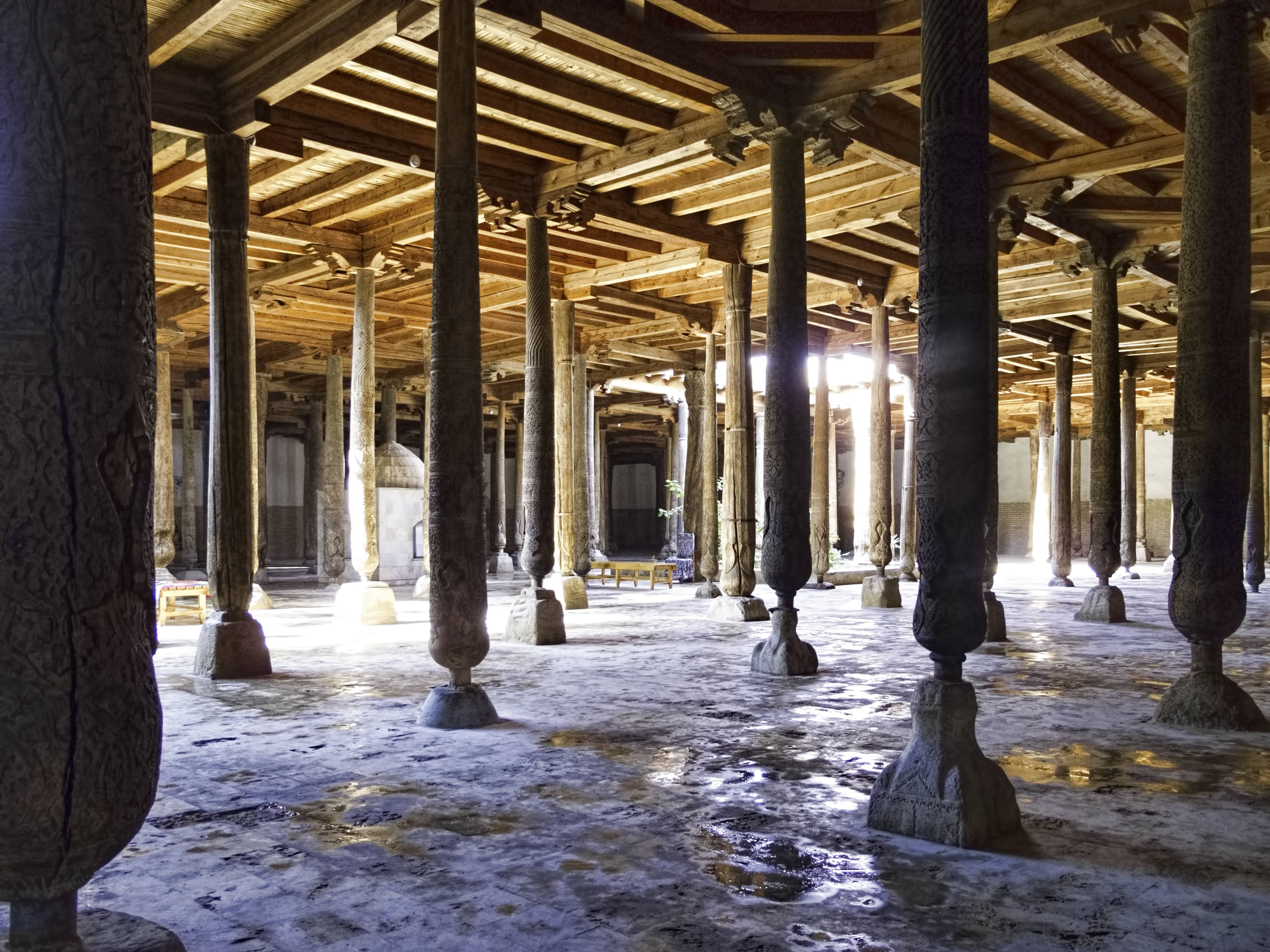
Juma Mosque (Friday Mosque)
One of the most atmospheric religious spaces in Central Asia: an unadorned single-story hall supported by 218 uniquely carved antique wooden columns dating from the 10th to 18th centuries.
The Lighthouse of the Desert
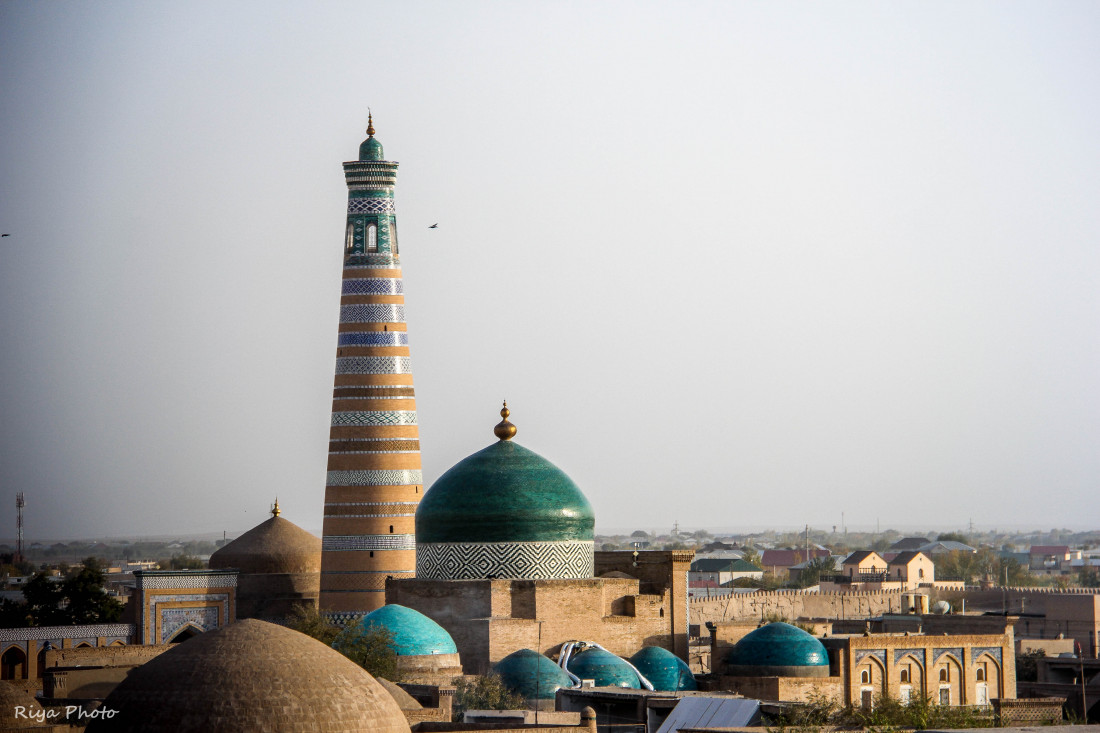
Khiva's tallest vertical monument: a 56-meter-high slender minaret decorated in concentric bands of turquoise, cobalt, and white majolica tiles, paired with a charming asymmetric madrasa.
Southeastern quadrant of Ichan-Kala
Minaret, Madrasa
1908 – 1910 CE
Islam Khoja (Progressive Prime Minister of Khiva)
Higher education
1 – 1.5 hours
The soaring vertical centerpiece of Khiva’s skyline. Built at the dawn of the 20th century, it is Central Asia’s youngest major historic minaret, rising like an elegant lighthouse above the flat roofs of Ichan-Kala.
Erected between 1908 and 1910 under the patronage of Prime Minister Islam Khoja, designed by master architect Usto Khudaibergan Khoja.
Commissioned by Islam Khoja, an enlightened and reformist statesman who introduced modern schools, telegraph lines, and hospitals to the Khanate, intending to leave an enduring monumental legacy.
A dual complex: the madrasa housed forty-two student rooms and an extensive library, while the minaret served as a visual beacon, call-to-prayer tower, and municipal watchtower.
An engaging narrative detailing how this monument evolved across Khorezm's golden ages, desert trade conflicts, and modern preservation.
Islam Khoja's progressive reforms aroused bitter jealousy among conservative court rivals. In 1913, assassins attacked him on his way back to the palace, ending his life. Today, his memorial complex remains the most admired silhouette in Khiva.
Features you can see with your own eyes: carved elm columns, majolica friezes, adobe brick bonds, and acoustic domes.
The minaret tapers gracefully from a base diameter of 9.5 meters to 6 meters at the top. Fourteen horizontal bands of glazed brickwork alternate with warm terracotta, culminating in a beautiful arched lantern balcony and gold finial. Inside the madrasa, the Museum of Applied Arts displays master Khorezm woodcarvings and jewelry.
Carefully selected activities genuinely relevant to this monument or quarter.
Ascend the 175 steep spiral steps inside the narrow minaret shaft for the highest viewpoint in Khiva.
Admire vintage Khorezm silver tiaras, wedding jewelry, and carved wooden doors inside the madrasa.
Photograph the minaret from the shaded stone lane leading up from the west.
Core educational takeaways that bring Khiva's Silk Road legacy into sharp perspective.
How traditional Islamic architecture experienced a glorious final renaissance just before the Russian Revolution.
The architectural mathematics of tapering cylindrical shafts that withstand wind shear and earth tremors.
Courtyard teahouses, woodcarving studios, and quiet residential lanes right around this site.
Directly opposite are cozy family-run guest houses and rooftop teahouses with open views of the illuminated minaret at night.
Explore other walled landmarks and quarters connected with this site's history or walking circuit.
Sacred Mosques & ShrinesOne of the most atmospheric religious spaces in Central Asia: an unadorned single-story hall supported by 218 uniquely carved antique wooden columns dating from the 10th to 18th centuries.
 Royal Palaces & Fortresses
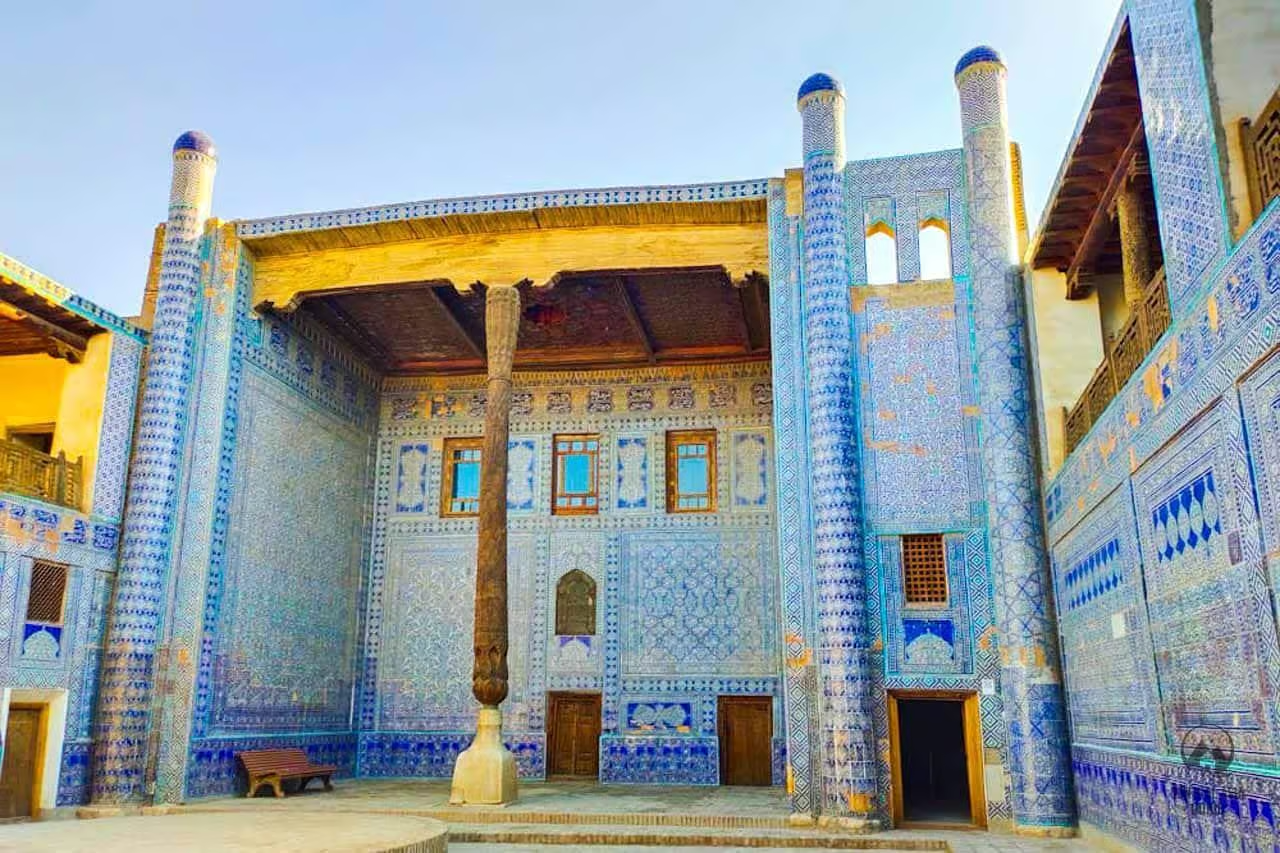
An opulent 19th-century royal palace containing over 150 rooms and three grand courtyards, smothered in the most dense, hypnotic cobalt and turquoise majolica tiles in Uzbekistan.
 Sacred Mosques & Shrines
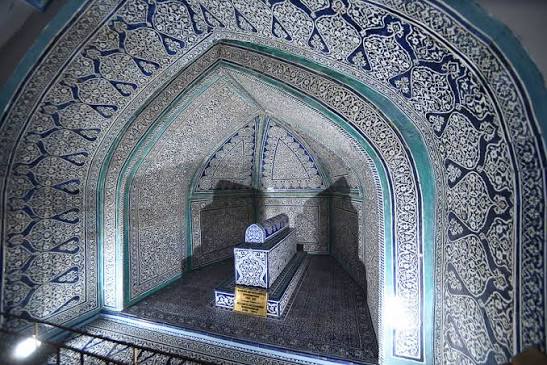
The spiritual heart of Khiva: an exquisite turquoise-domed complex honoring Khiva's patron saint — a legendary wrestler, poet, furrier, and philosopher revered across Central Asia.
Looking for something beyond this monument? Discover royal fortresses, sacred woodcarvings, or Silk Road bazaar alleys.
A fortified royal fortress-citadel within Ichan-Kala, housing the Khan's summer reception hall, mint, throne room, and the famous Ak-Sheikh Bobo watchtower.
One of the most atmospheric religious spaces in Central Asia: an unadorned single-story hall supported by 218 uniquely carved antique wooden columns dating from the 10th to 18th centuries.
.jpg)
Experience Ichan-Kala, royal desert palaces, and ancient Silk Road trading chambers with expert Khorezm cultural guides and seamless logistics.