
 Historic City & Walls
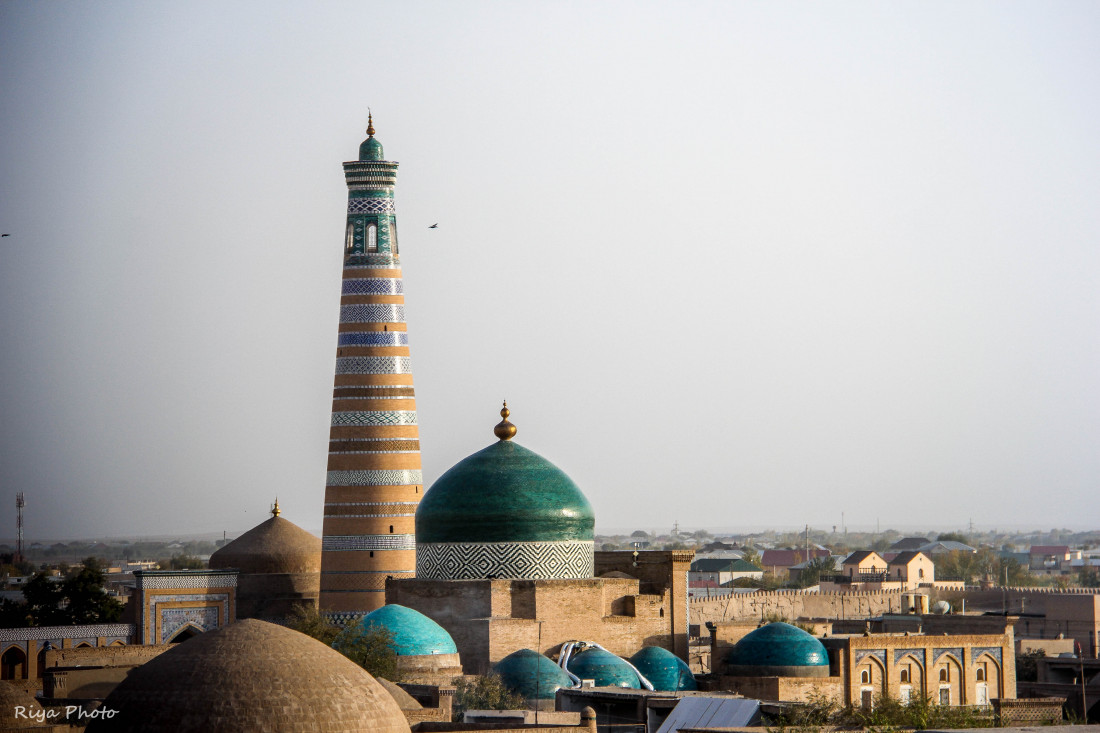
Islam Khoja Minaret & Madrasa
Khiva's tallest vertical monument: a 56-meter-high slender minaret decorated in concentric bands of turquoise, cobalt, and white majolica tiles, paired with a charming asymmetric madrasa.
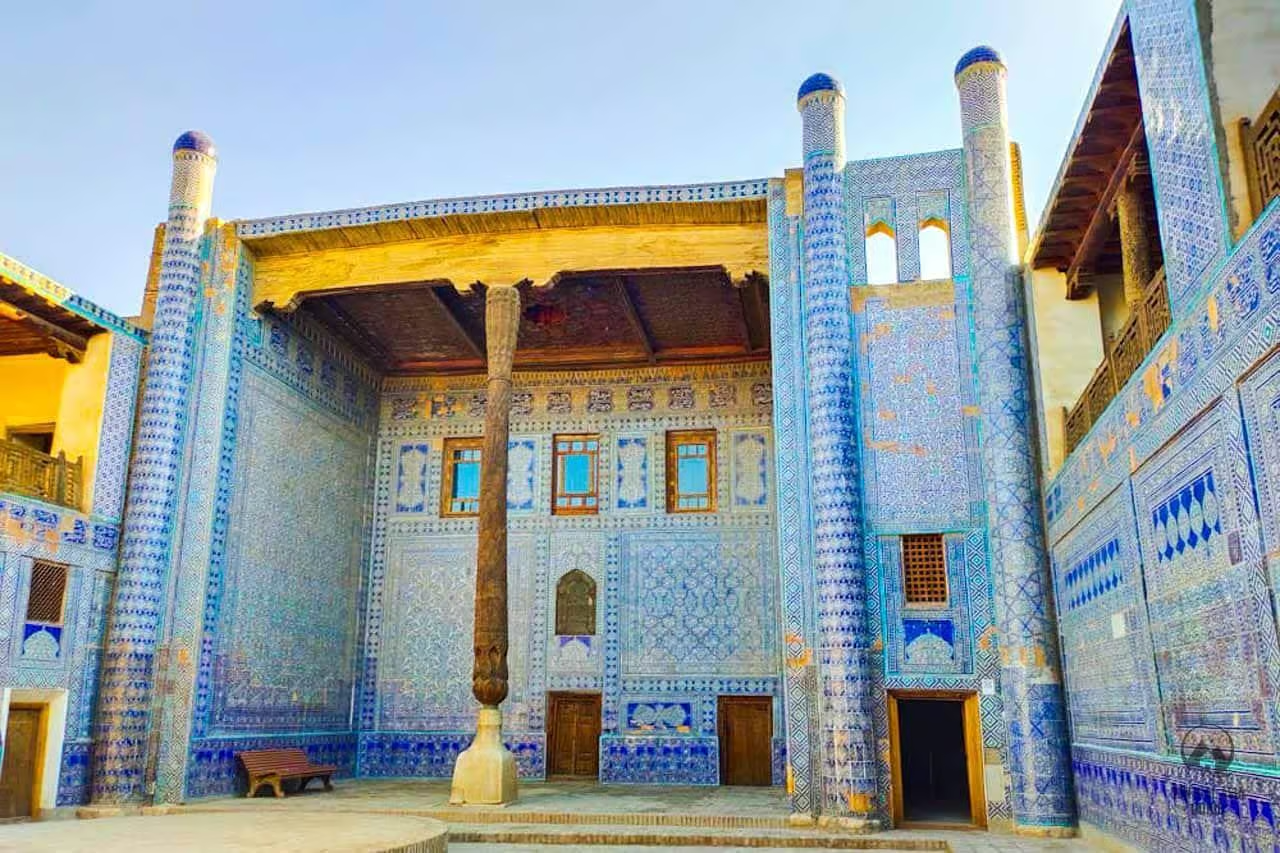
The Stone Palace of Labyrinths and Tile
An opulent 19th-century royal palace containing over 150 rooms and three grand courtyards, smothered in the most dense, hypnotic cobalt and turquoise majolica tiles in Uzbekistan.
Eastern quadrant of Ichan-Kala
Royal Residential
1830 – 1838 CE
Allakuli Khan (Khan of Khiva)
Private royal residence
1.5 hours
Tash Hauli (meaning 'Stone Palace') was built as a more luxurious and private alternative to the austere Kunya-Ark fortress. It is an astonishing labyrinth of grand ceremonial courts, high-vaulted wooden porches (iwans), and secluded residential chambers for the Khan, his four wives, and royal retinue.
Constructed over eight frantic years from 1830 to 1838. When the first master architect, Usto Nurmuhammad Kalandar, reported that building the palace within the Khan's unrealistic two-year deadline was impossible, the impatient Khan had him executed, hiring a second master to complete it.
Allakuli Khan, one of Khiva’s most ambitious builders, who sought a palace that combined unyielding fortress security with the utmost luxury, privacy, and artistic brilliance.
Divided into three distinct functional zones: the Harem (private residential quarters for the Khan and family), the Arz-khana (reception court for trials and state petitions), and the Ishrat-khana (court for lavish banquets and royal entertainment).
Tash Hauli comprises more than 150 rooms and 9 intimate courtyards arranged in three autonomous functional wings:
An engaging narrative detailing how this monument evolved across Khorezm's golden ages, desert trade conflicts, and modern preservation.
The harem section occupies the entire northern half of the palace: five large decorated iwans face an enclosed stone courtyard — one magnificent high iwan for the Khan himself, and four opposite iwans for his four lawful wives, each decorated with unique tiled medallions.
Features you can see with your own eyes: carved elm columns, majolica friezes, adobe brick bonds, and acoustic domes.
Nowhere else in Central Asia is ceramic majolica tilework more continuous: every square meter of wall is covered in intricate blue, white, and lapis floral spirals created by ceramic genius Abdullah Jin. Intricately carved walnut pillars stand on sculpted marble bases, while ceilings feature painted wooden lacquerwork.
Carefully selected activities genuinely relevant to this monument or quarter.
Stand in the secluded stone court admiring the five towering pillared iwans.
Inspect the hand-painted tiles showing interlocking Chinese cloud bands and Persian floral motifs.
See where the Khan sat upon his raised stone platform delivering imperial judgments.
Core educational takeaways that bring Khiva's Silk Road legacy into sharp perspective.
How the royal family structured their daily routines, security, and private lives in 19th-century Central Asia.
The labor-intensive method of hand-painting cobalt designs onto unfired glaze before high-temperature firing.
Courtyard teahouses, woodcarving studios, and quiet residential lanes right around this site.
Located beside the Palvan Darvoza (East Gate) and Allakuli Khan Caravanserai; perfect for exploring ancient trading markets afterwards.
Explore other walled landmarks and quarters connected with this site's history or walking circuit.
Historic City & WallsKhiva's tallest vertical monument: a 56-meter-high slender minaret decorated in concentric bands of turquoise, cobalt, and white majolica tiles, paired with a charming asymmetric madrasa.
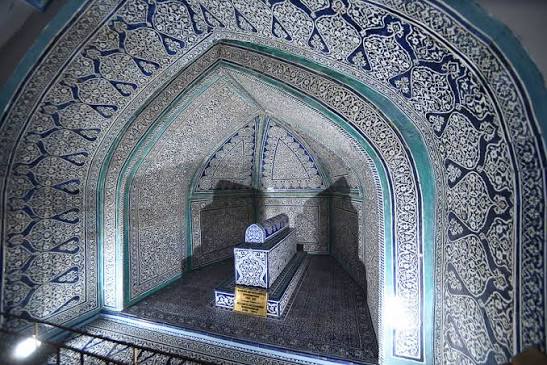 Sacred Mosques & Shrines
The spiritual heart of Khiva: an exquisite turquoise-domed complex honoring Khiva's patron saint — a legendary wrestler, poet, furrier, and philosopher revered across Central Asia.
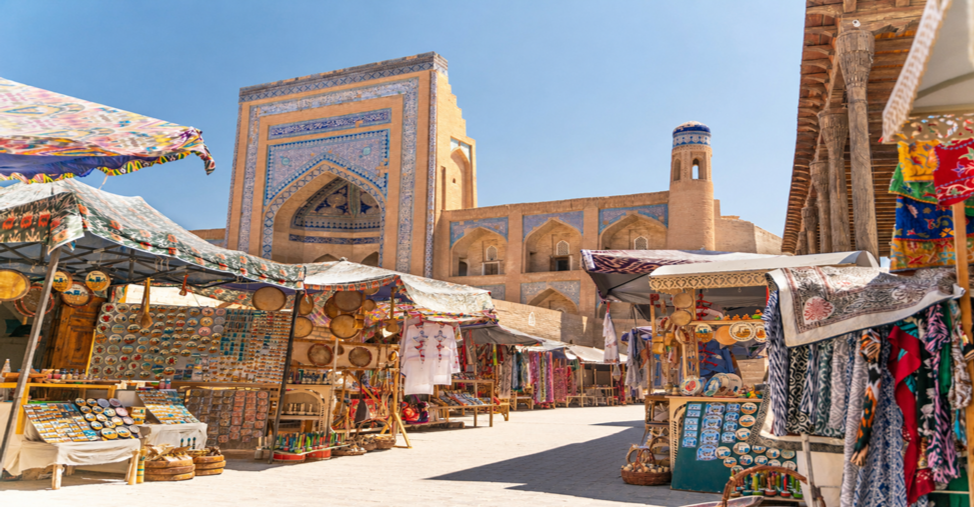 Silk Road Commerce & Caravans
A monumental 19th-century merchant complex combining an enormous two-story caravanserai with the multi-domed covered Tim bazaar, where trans-Eurasian caravans traded.
Looking for something beyond this monument? Discover royal fortresses, sacred woodcarvings, or Silk Road bazaar alleys.
A completely intact medieval Silk Road city surrounded by two kilometers of undulating mud-brick walls, preserving over fifty historic monuments within a living pedestrian realm.
Khiva’s most iconic and photogenic landmark: a colossal, truncated minaret completely wrapped in gleaming azure, turquoise, and white ceramic tilework.
.jpg)
Experience Ichan-Kala, royal desert palaces, and ancient Silk Road trading chambers with expert Khorezm cultural guides and seamless logistics.