
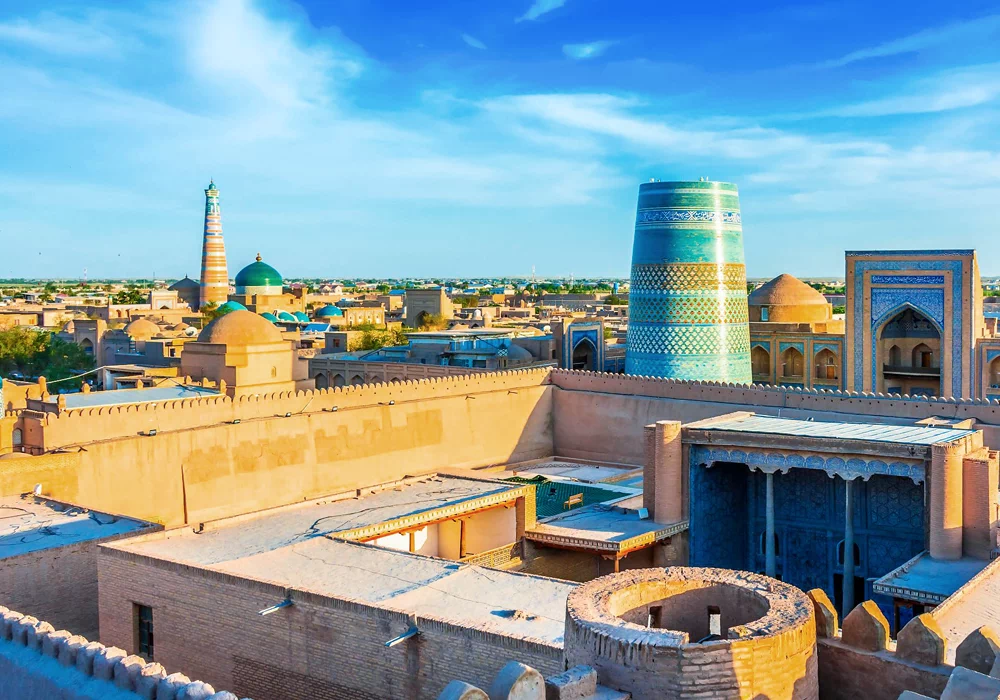
 Historic City & Walls
Ichan-Kala (The Historic Walled City)
A completely intact medieval Silk Road city surrounded by two kilometers of undulating mud-brick walls, preserving over fifty historic monuments within a living pedestrian realm.
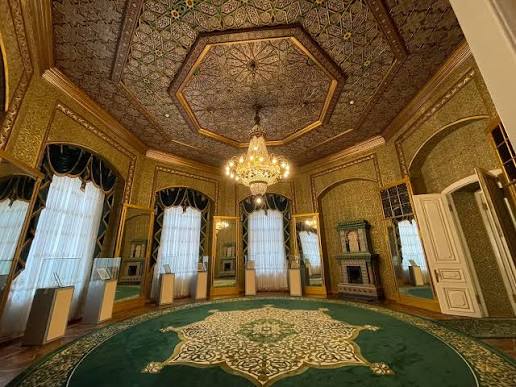
The Belle Époque of the Last Khans
A stunning early 20th-century royal palace built outside Ichan-Kala, showcasing an opulent fusion of traditional Khiva woodcarving and Russian Art Nouveau luxury.
Dishan-Kala (Outer Town)
Imperial Palace
1906 – 1912 CE
Muhammad Rahim Khan II (Feruz) & Asfandiyar Khan
Summer residence of the Khan and official state diplomatic reception palace
1.5 hours
A magnificent countryside palace complex built just outside the inner walls in Dishan-Kala. Covering two hectares with gardens and courtyards, it features seven state reception halls equipped with gigantic crystal chandeliers, Dutch tiled fireplaces, Venetian mirrors, and carved ganch plasterwork.
Commissioned in 1906 by Muhammad Rahim Khan II (known as the poet-king Feruz) on land purchased from a wealthy merchant named Nurullaboy, and completed in 1912 by his son Asfandiyar Khan.
Built to receive European dignitaries, Russian tsarist ministers, and foreign ambassadors in a setting that demonstrated Khiva’s embrace of modern international luxury while celebrating ancestral decorative arts.
The ceremonial and diplomatic palace of the last Khivan Khans, equipped with modern electric chandeliers powered by the Khanate's very first diesel generator.
An engaging narrative detailing how this monument evolved across Khorezm's golden ages, desert trade conflicts, and modern preservation.
Tsar Nicholas II of Russia presented the Khan with magnificent gifts for the palace, including bronze chandeliers weighing hundreds of kilograms, porcelain heating stoves, and full-length mirrors that still reflect the intricately painted ceilings.
Features you can see with your own eyes: carved elm columns, majolica friezes, adobe brick bonds, and acoustic domes.
A dazzling East-West synthesis: ceilings feature German and Russian Art Nouveau floral wallpapers harmonized with hand-carved Uzbek ganch (alabaster) plaster reliefs, parquet wood floors, and traditional Khiva carved elm wood entrance doors.
Carefully selected activities genuinely relevant to this monument or quarter.
Walk beneath towering crystal chandeliers and admire gold-leafed ornamental ceilings.
Explore the quiet walled orchard and rose garden surrounding the main palace wings.
Capture the vibrant contrast between Russian porcelain fireplaces and traditional Uzbek carved wood.
Core educational takeaways that bring Khiva's Silk Road legacy into sharp perspective.
How traditional monarchs integrated European industrial luxuries with Central Asian identity.
The distinction between Khiva’s ancient inner walled citadel and its expansive 19th-century outer town.
Courtyard teahouses, woodcarving studios, and quiet residential lanes right around this site.
Located in a pleasant tree-lined district of the outer town with relaxed local teahouses serving Khorezmian green dill noodles (shivit oshi).
Explore other walled landmarks and quarters connected with this site's history or walking circuit.
Historic City & WallsA completely intact medieval Silk Road city surrounded by two kilometers of undulating mud-brick walls, preserving over fifty historic monuments within a living pedestrian realm.
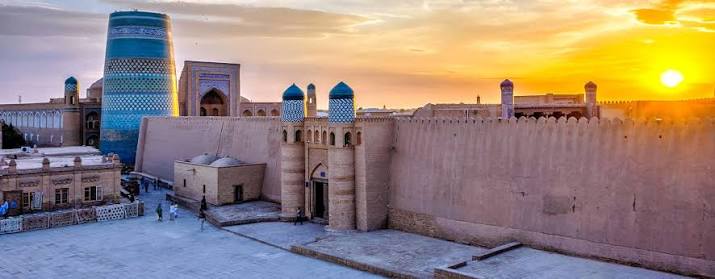 Royal Palaces & Fortresses
A fortified royal fortress-citadel within Ichan-Kala, housing the Khan's summer reception hall, mint, throne room, and the famous Ak-Sheikh Bobo watchtower.
Looking for something beyond this monument? Discover royal fortresses, sacred woodcarvings, or Silk Road bazaar alleys.
A completely intact medieval Silk Road city surrounded by two kilometers of undulating mud-brick walls, preserving over fifty historic monuments within a living pedestrian realm.
Khiva’s most iconic and photogenic landmark: a colossal, truncated minaret completely wrapped in gleaming azure, turquoise, and white ceramic tilework.
.jpg)
Experience Ichan-Kala, royal desert palaces, and ancient Silk Road trading chambers with expert Khorezm cultural guides and seamless logistics.