
 Timurid Samarkand
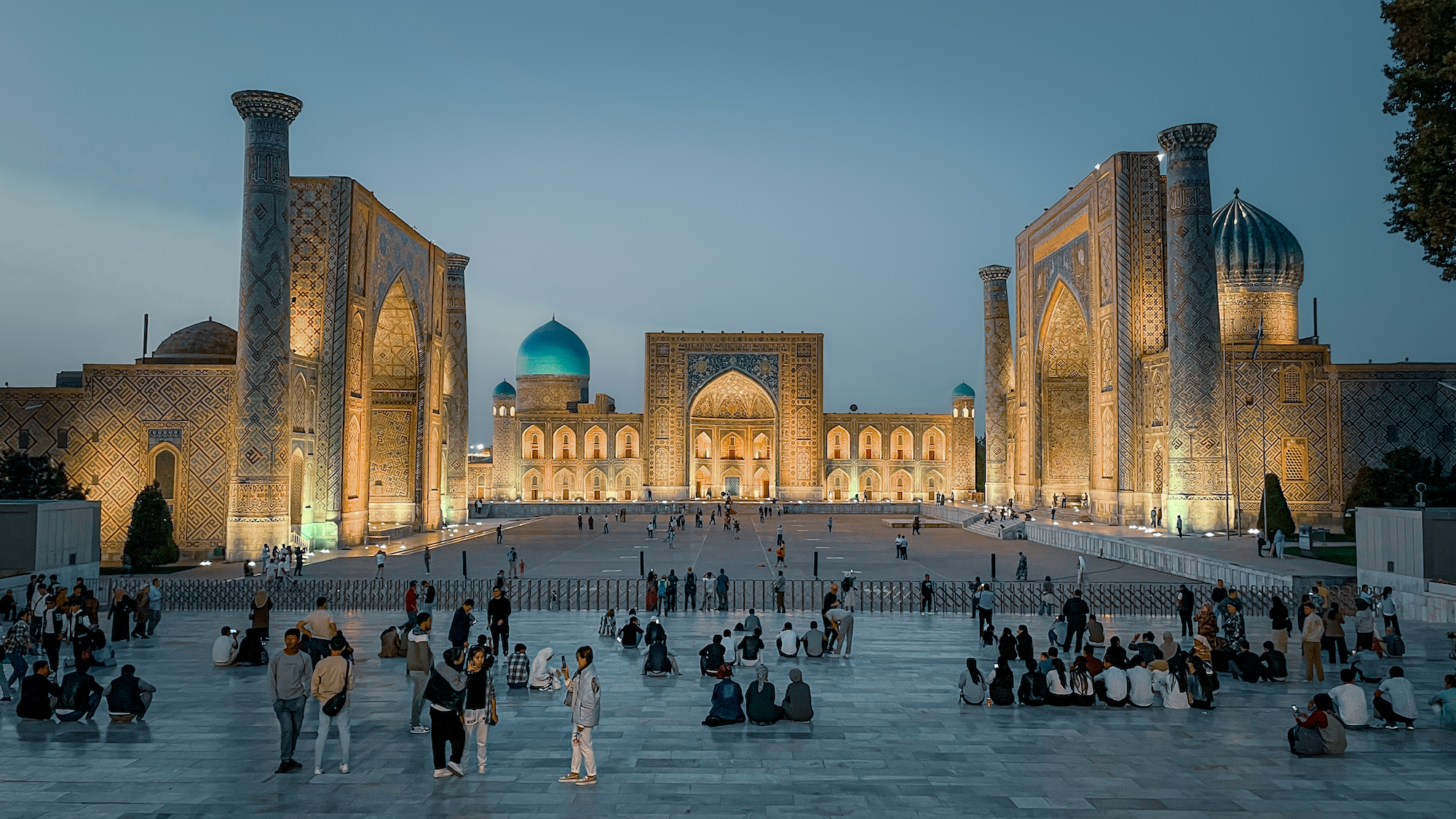
Registan Square
One of the world’s most breathtaking public squares, framed by three monumental tiled madrasas that established Samarkand as a global center of science and faith.
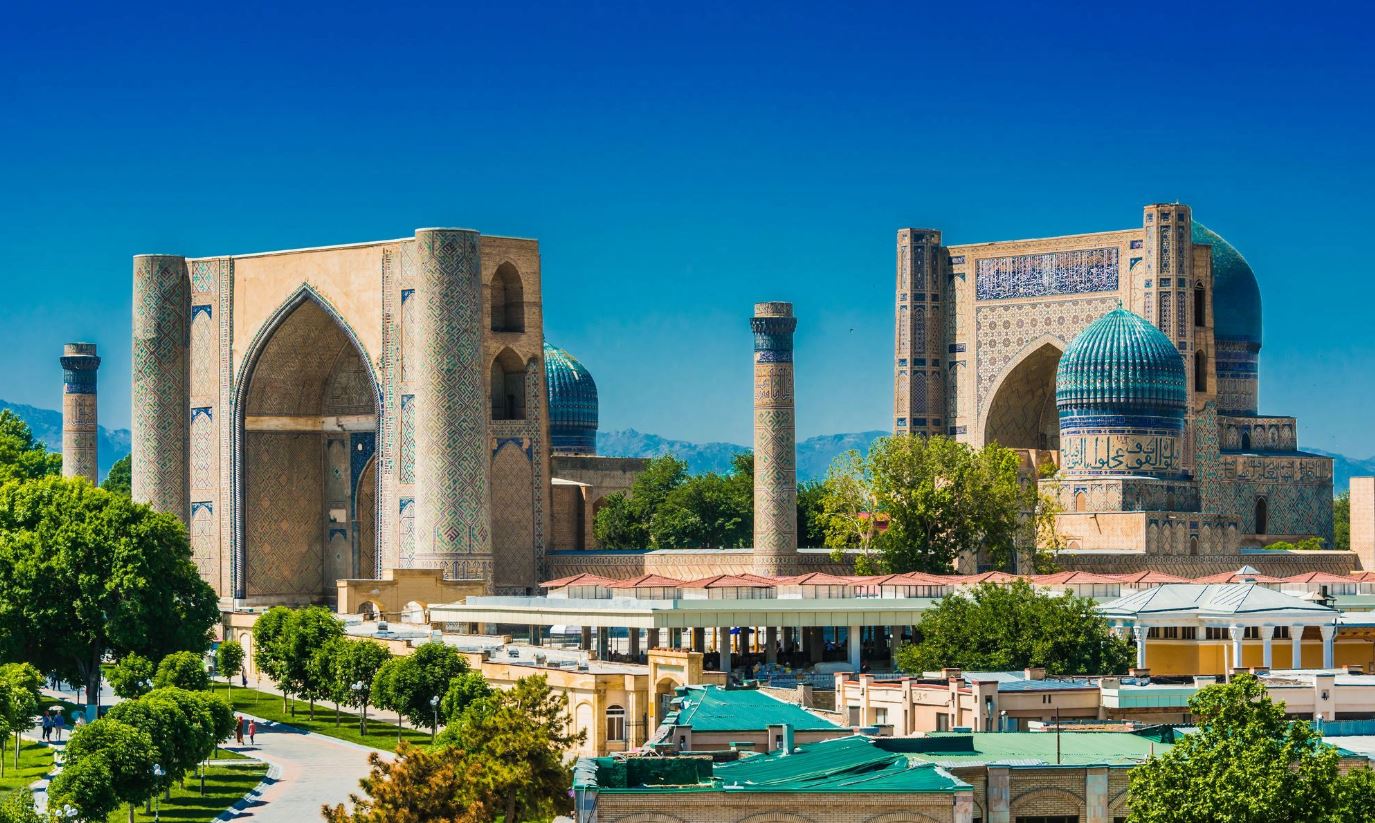
Timur's Monumental Friday Mosque
One of the largest and most ambitious religious buildings of the medieval world, built by Timur to rival the heavens.
Directly opposite Siab Bazaar
Imperial Friday Mosque (Juma)
1399 – 1404 CE
Amir Timur
Congregational Friday mosque accommodating Samarkand's entire male population
1.5 – 2 hours
Bibi-Khanym Mosque is a colossal architectural complex whose main portal rose over 40 meters high. Built after Timur's victorious Indian campaign, it pushed 15th-century engineering to the absolute limits of scale and masonry.
Constructed rapidly between 1399 and 1404 employing over 200 skilled stonemasons, hundreds of artisans, and 95 war elephants brought from India to haul stone blocks from the Zarafshan quarries.
Commissioned by Timur to declare Samarkand the capital of the Islamic world and demonstrate imperial might through superhuman architectural scale. Popular romantic legend attributes the building to his wife, Bibi-Khanym, though historical records show Timur directed the work obsessively.
The city's supreme Friday mosque, where thousands gathered for weekly community worship, state sermons, and public celebrations.
An engaging chronological story free from dry textbook jargon, focusing on how this place influenced the Silk Road.
Because Timur demanded unprecedented heights in a hurry, structural cracks appeared in the brickwork even during his lifetime. Earthquakes over subsequent centuries brought down parts of the towering portal. Major restoration projects since the late 20th century stabilized and restored the soaring cupolas.
What to notice and look for when standing before this site.
The complex includes a colossal courtyard, a main dome mosque, two smaller side mosques, and four minarets. In the center of the marble-paved courtyard stands a gigantic carved marble Quran stand (lauh) crafted by Ulugh Beg; local folklore holds that crawling beneath it blesses women with children.
Activities and sensory experiences specifically relevant to this site.
Stand at the base of the 40-meter entrance vault to feel the immense vertical weight.
Inspect the massive marble stand that once held the priceless 7th-century Uthman Quran.
Photograph the contrast between unrestored raw masonry and restored sapphire tilework.
The historical, scientific, or cultural takeaways that enrich your understanding of Central Asia.
How medieval mortar and unreinforced brick struggled against the violent seismic shifts of Central Asia.
How monumental architecture functioned as political theatre for visiting ambassadors along the Silk Road.
Recommendations for teahouses, bakeries, artisan workshops, and walks in the surrounding neighborhood.
The mosque opens directly onto the vibrant Siab Bazaar gate. Walk 30 seconds into the market for freshly baked non and mountain almonds.
Explore other regional landmarks that share historical or geographic connections with this site.
Timurid SamarkandOne of the world’s most breathtaking public squares, framed by three monumental tiled madrasas that established Samarkand as a global center of science and faith.
 Timurid Samarkand
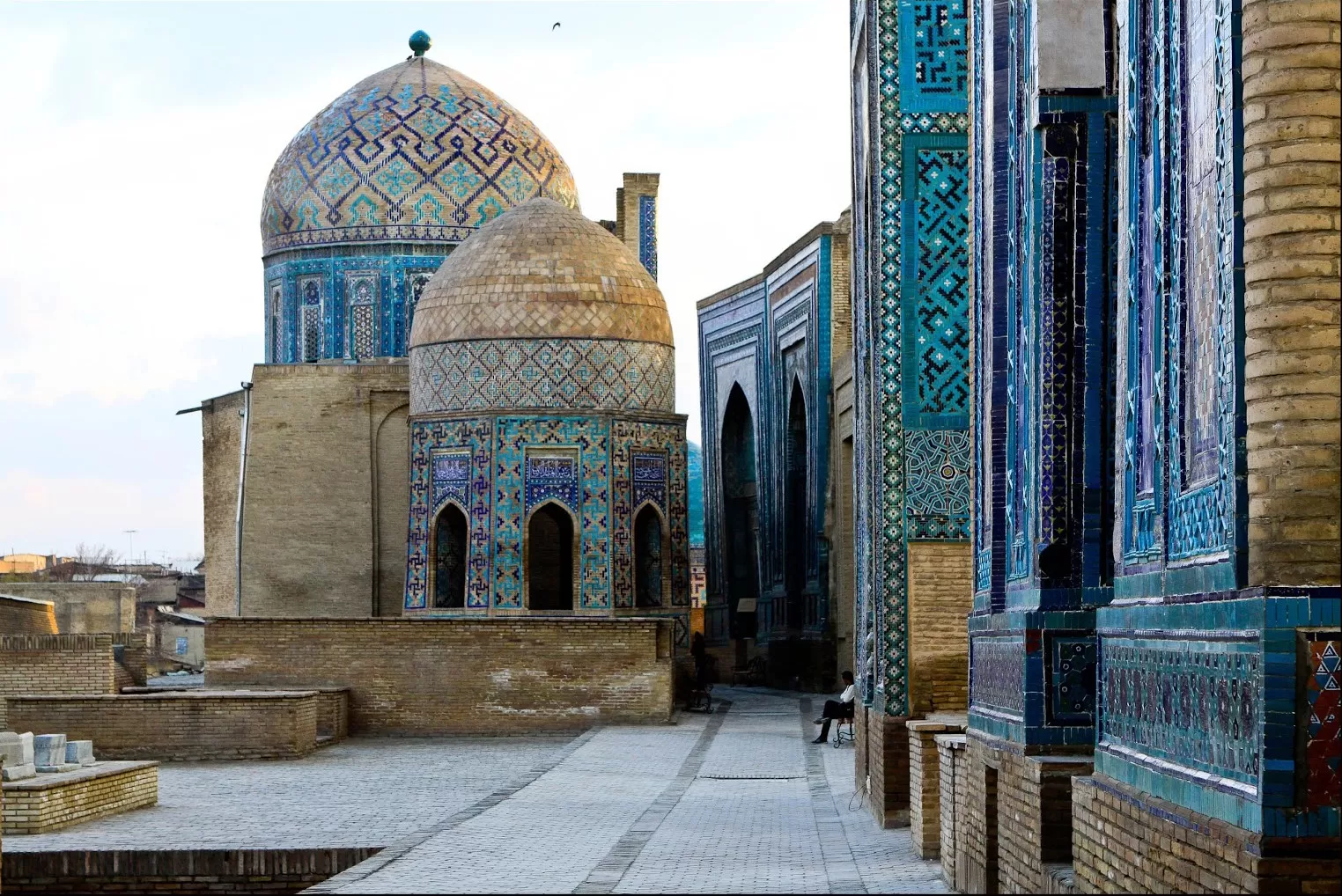
A sacred hillside necropolis boasting the most exquisite cobalt, turquoise, and lapis lazuli tilework in the entire Islamic world.
 Living Samarkand
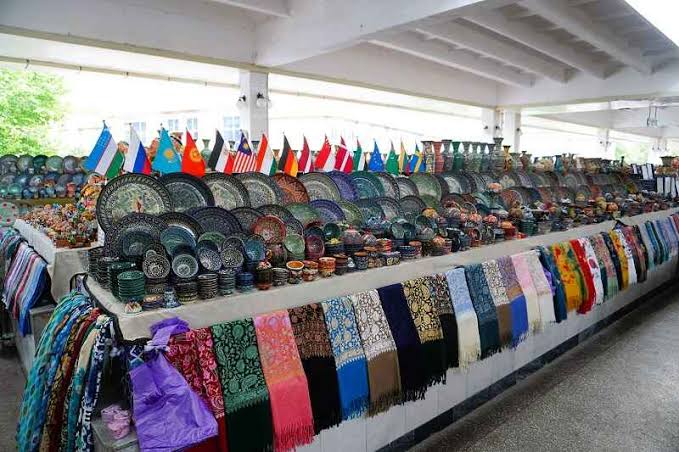
Central Asia’s most vibrant covered trading bazaar: stacks of golden Samarkand bread, dried apricots, mountain honey, and mountain spices.
Looking for something beyond this monument? Discover a completely different historical or natural dimension of the region.
The birthplace of Samarkand: an undulating 200-hectare archaeological hill preserving 2,500 years of Sogdian, Persian, and Hellenistic urban history.
A tranquil riverside mill where the ancient art of making silk-smooth, archival mulberry paper is kept alive using water-powered wooden hammers.
.jpg)
Include this landmark in a customized private or small-group journey combining ancient cities with Nuratau Mountain homestays.