
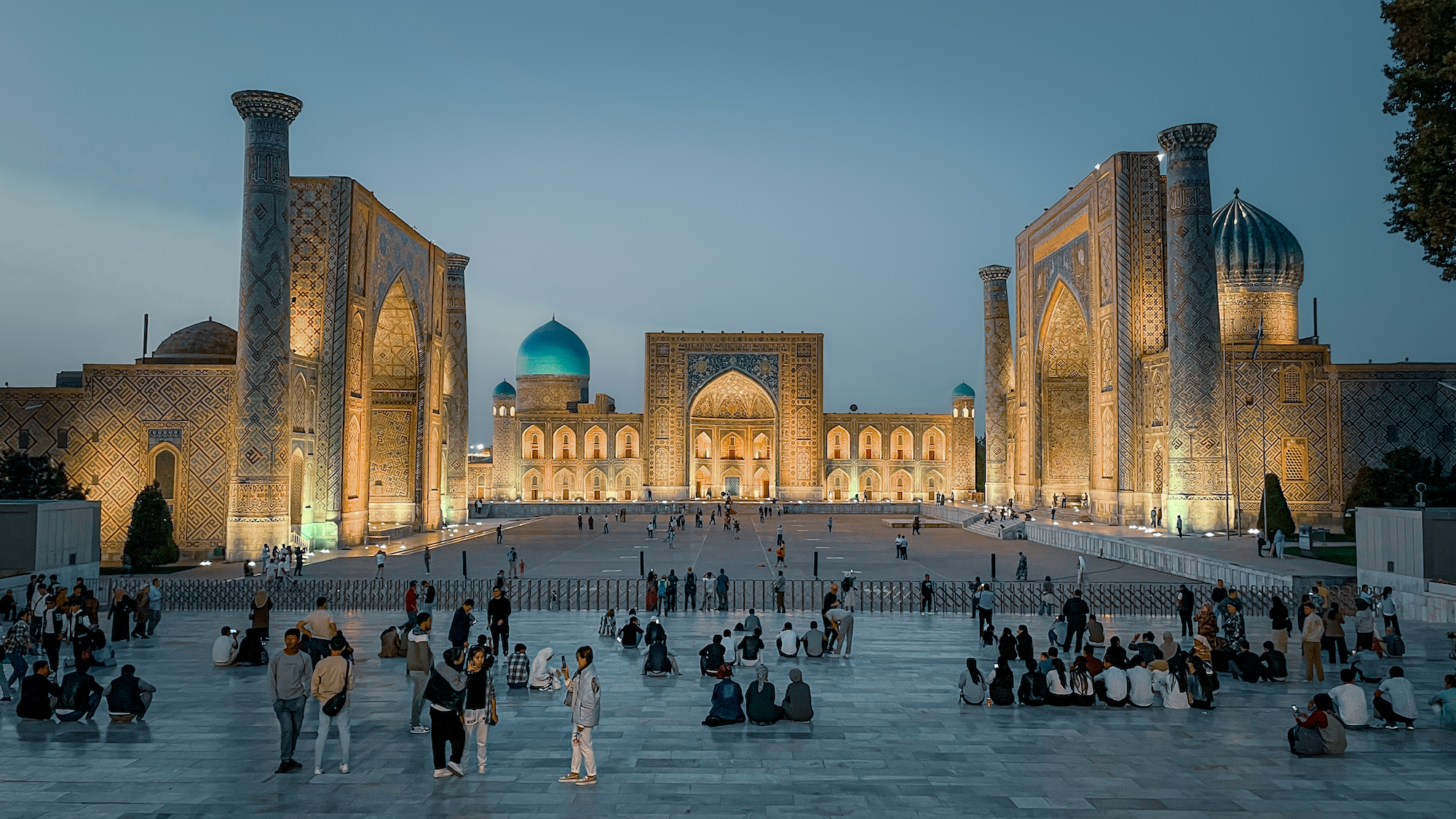
 Timurid Samarkand
Registan Square
One of the world’s most breathtaking public squares, framed by three monumental tiled madrasas that established Samarkand as a global center of science and faith.
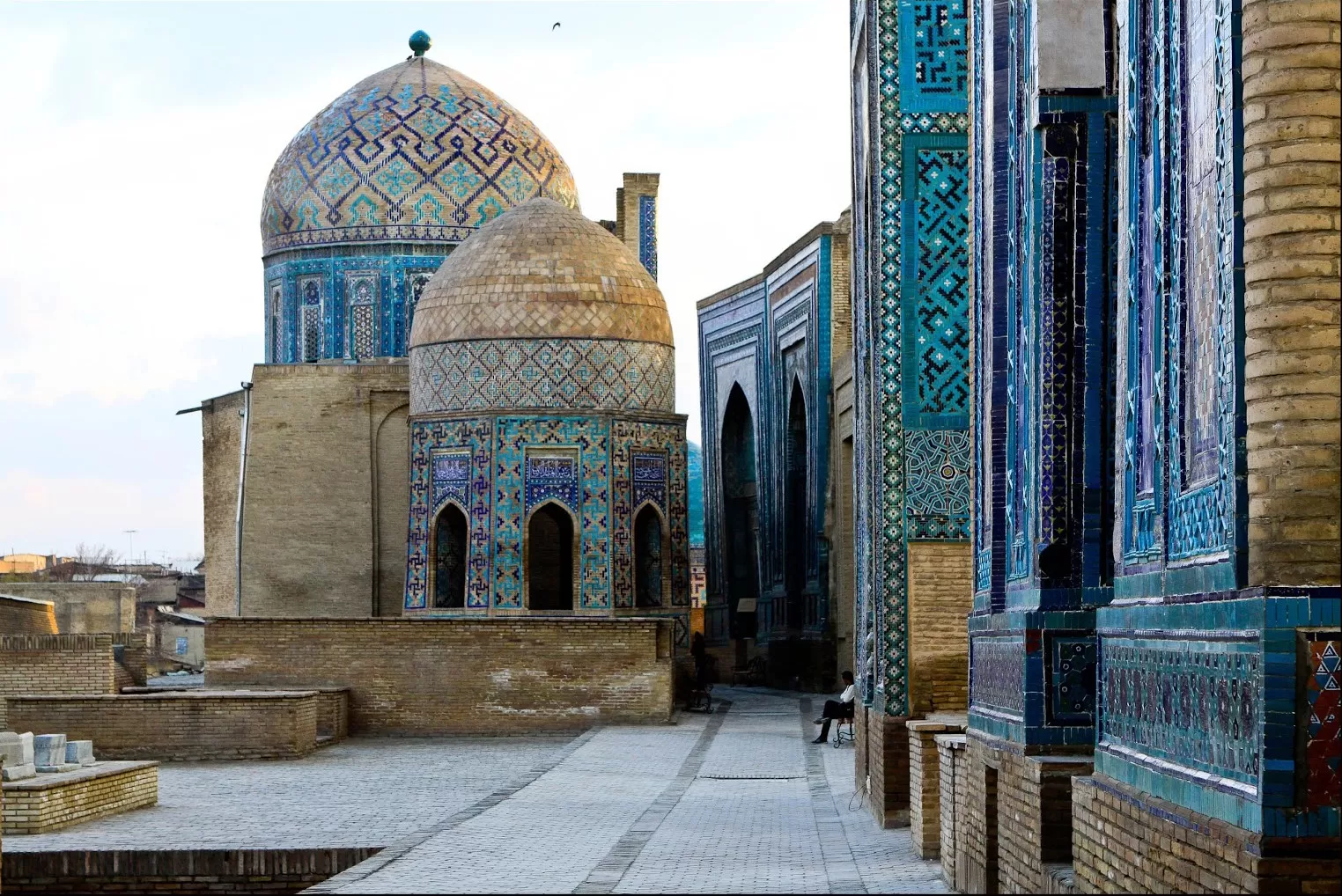
The Avenue of Azure Mausoleums
A sacred hillside necropolis boasting the most exquisite cobalt, turquoise, and lapis lazuli tilework in the entire Islamic world.
Northeastern slope of ancient Afrasiab hill
Monumental Necropolis
11th – 15th Century CE
Qusam ibn Abbas shrine with Timurid royal additions
Pilgrimage shrine and burial complex for royal family members
2 hours
Shah-i-Zinda (meaning 'The Living King') is an ascending avenue of over twenty mausoleums and ritual mosques stepped up the slope of the ancient Afrasiab settlement. It is revered both as a major Islamic pilgrimage destination and as a peerless masterclass in ceramic tile artistry.
The oldest structural foundations date to the Karakhanid era in the 11th century around the tomb of Qusam ibn Abbas. The dazzling blue corridor visitors walk today was primarily commissioned between 1370 and 1440 by Amir Timur and Ulugh Beg for royal female family members, military generals, and revered theologians.
Built over generations by Timurid royalty to place their tombs in sacred proximity to Qusam ibn Abbas, a cousin of the Prophet Muhammad who brought Islam to the region in the 7th century and whom local tradition regards as living in spiritual presence.
A sacred complex for communal prayers, Quranic recitations, quiet contemplation, and burial ceremonies for the dynasty’s most honored matriarchs and scholars.
An engaging chronological story free from dry textbook jargon, focusing on how this place influenced the Silk Road.
According to legend, when invaders attacked, Qusam ibn Abbas retreated into a deep well from which he will emerge when faith is in greatest need. Because of this spiritual sanctity, Timur chose this sacred corridor to construct lavish resting places for his sisters, wives, and architects, hiring the finest ceramicists from across Persia and Central Asia.
What to notice and look for when standing before this site.
Nowhere else on Earth is tilework more diverse or dense. The mausoleums feature carved terracotta, glazed polychrome tiles, golden lusterware, and intricate stalactite muqarnas under ribbed turquoise domes. Each tomb represents a distinct phase of ceramic technology.
Activities and sensory experiences specifically relevant to this site.
Walk slowly up the shaded corridor admiring how daylight shifts the tones from sapphire to emerald.
Witness respectful pilgrims seeking blessings at the inner shrine of Qusam ibn Abbas.
Focus on microscopic calligraphy and geometric floral mosaics.
The historical, scientific, or cultural takeaways that enrich your understanding of Central Asia.
How artisans perfected copper and cobalt mineral glazes that retain vivid brilliance after 600 years.
Many of the most lavish tombs were built by and for influential Timurid princesses and scholars.
Recommendations for teahouses, bakeries, artisan workshops, and walks in the surrounding neighborhood.
Exit toward the Afrasiab Archaeological Museum to the north, or take the footbridge across to Hazrat Khizr Mosque with its panoramic terrace overlooking the Silk Road highway.
Explore other regional landmarks that share historical or geographic connections with this site.
Timurid SamarkandOne of the world’s most breathtaking public squares, framed by three monumental tiled madrasas that established Samarkand as a global center of science and faith.
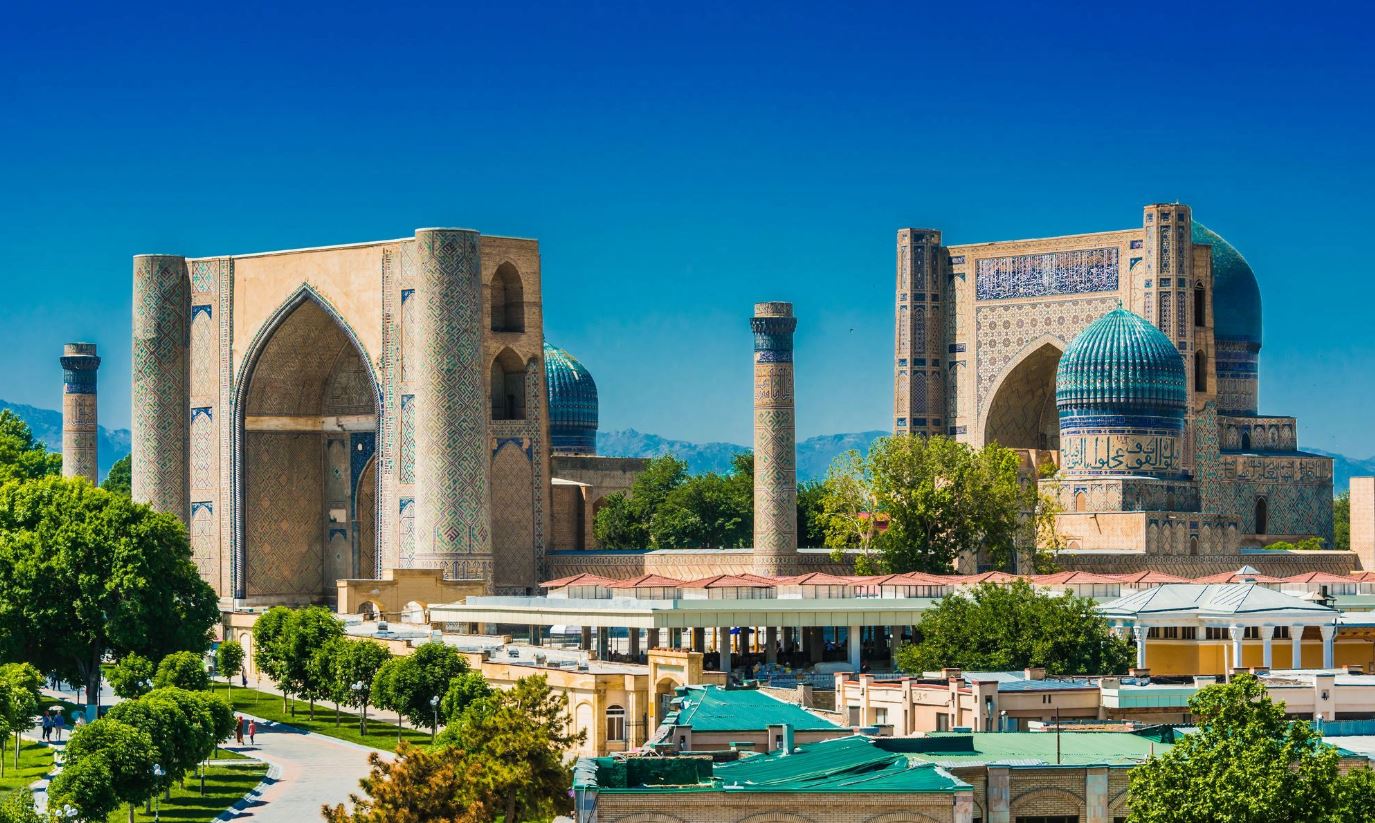 Timurid Samarkand
One of the largest and most ambitious religious buildings of the medieval world, built by Timur to rival the heavens.
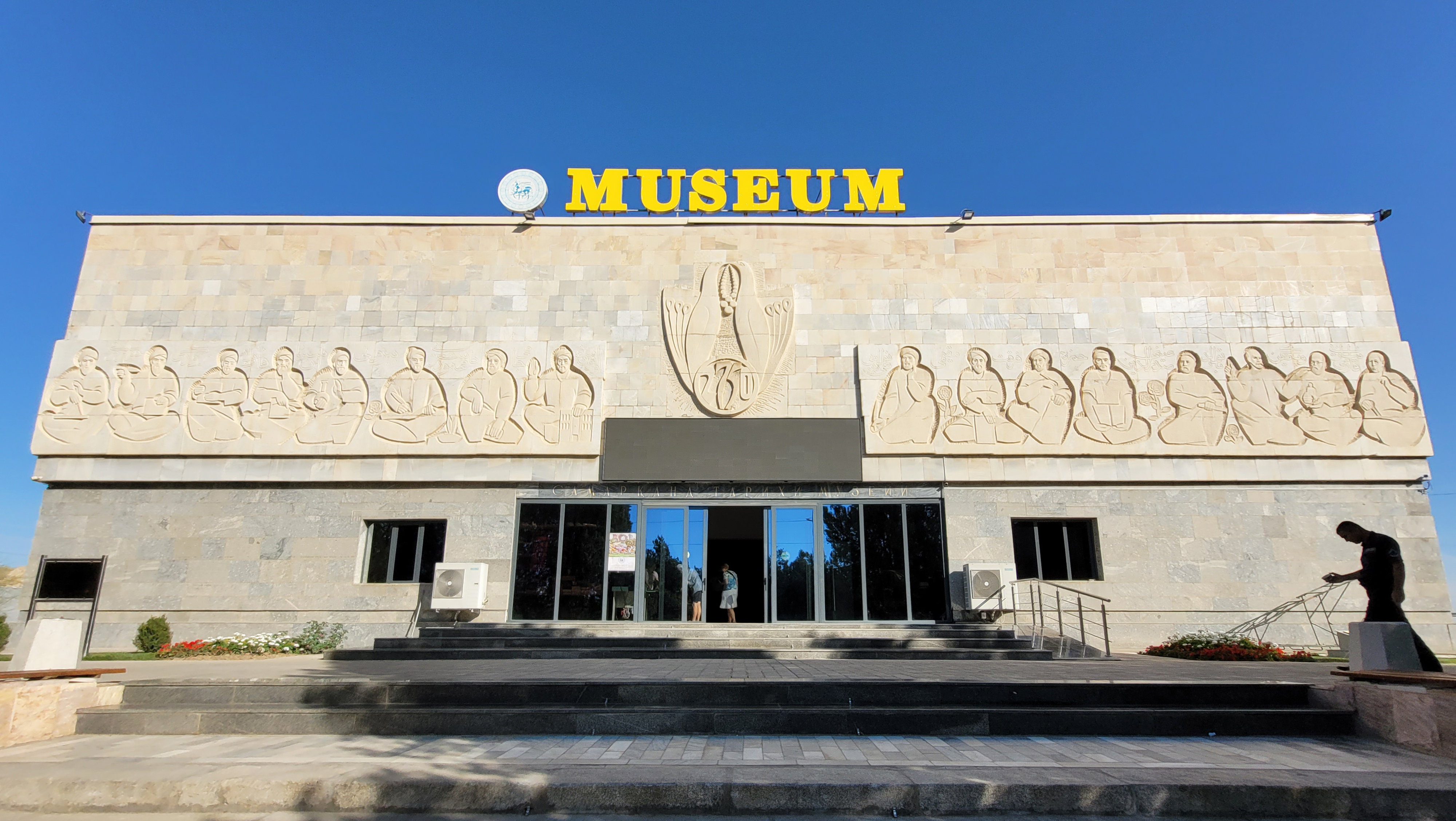 Ancient Samarkand
The birthplace of Samarkand: an undulating 200-hectare archaeological hill preserving 2,500 years of Sogdian, Persian, and Hellenistic urban history.
Looking for something beyond this monument? Discover a completely different historical or natural dimension of the region.
The birthplace of Samarkand: an undulating 200-hectare archaeological hill preserving 2,500 years of Sogdian, Persian, and Hellenistic urban history.
A tranquil riverside mill where the ancient art of making silk-smooth, archival mulberry paper is kept alive using water-powered wooden hammers.
.jpg)
Include this landmark in a customized private or small-group journey combining ancient cities with Nuratau Mountain homestays.