
 Timurid Samarkand
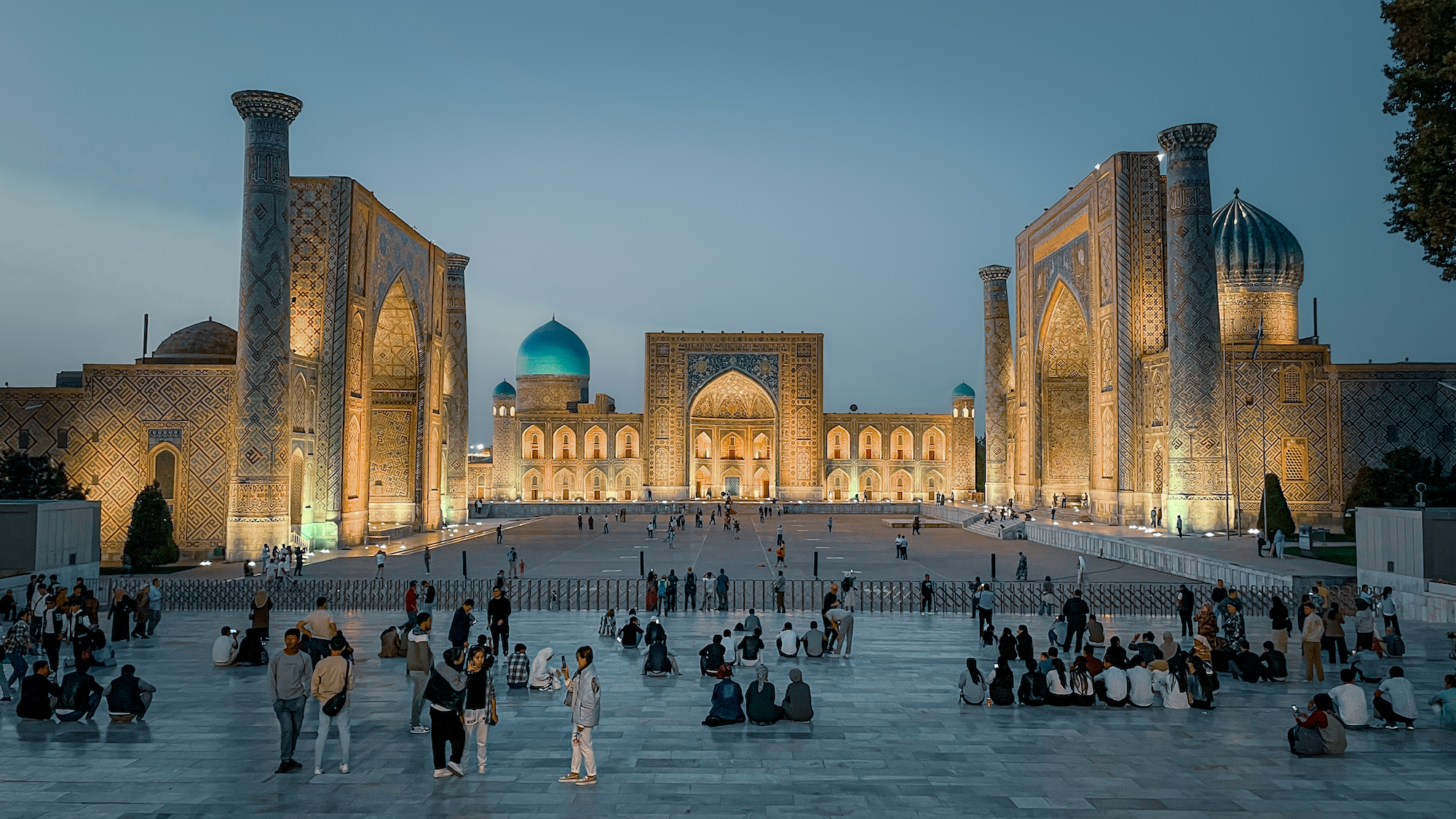
Registan Square
One of the world’s most breathtaking public squares, framed by three monumental tiled madrasas that established Samarkand as a global center of science and faith.
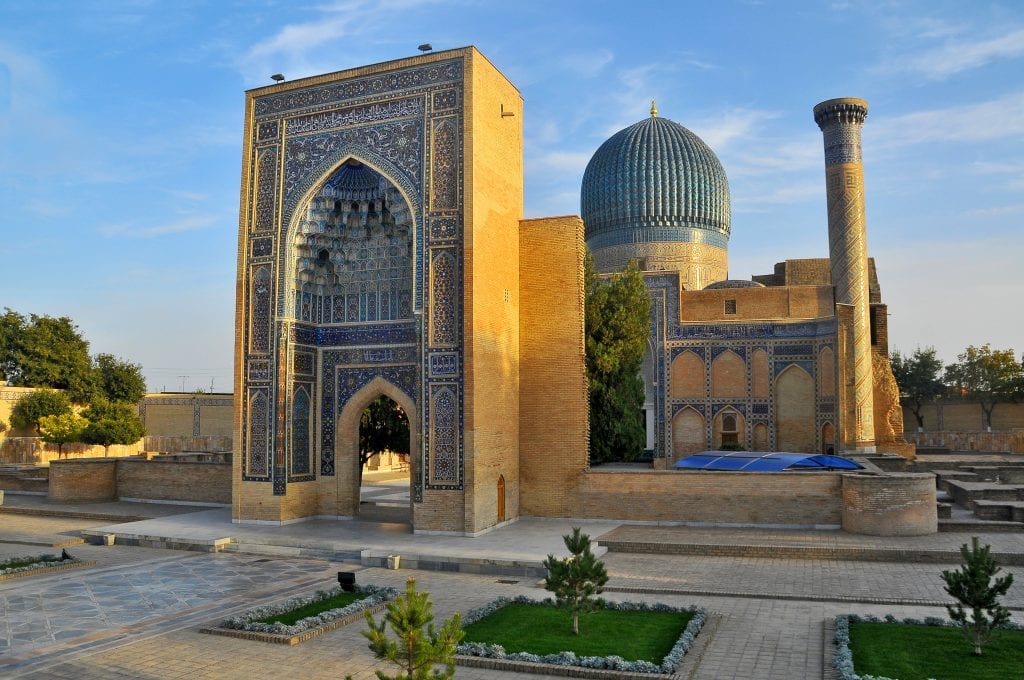
The Resting Place of Amir Timur
The magnificent fluted turquoise dome beneath which lies the jade cenotaph of Amir Timur (Tamerlane), the founder of the Timurid Empire.
Southwestern central Samarkand
Dynastic Imperial Mausoleum
1403 – 1405 CE
Amir Timur (Tamerlane) & Ulugh Beg
Memorial for Timur's grandson Muhammad Sultan; later dynastic tomb
1.5 hours
Gur-e-Amir (Persian for 'Tomb of the King') is the mausoleum of Amir Timur, his sons Shah Rukh and Miran Shah, and his grandson Ulugh Beg. Its 64-ribbed melon dome and rich golden interior served as the architectural prototype for the Taj Mahal in India.
Construction began in 1403 following the sudden death of Muhammad Sultan, Timur's beloved grandson and chosen heir. When Timur himself died unexpectedly in 1405 during an expedition to China, winter blizzards blocked the pass to his hometown of Shakhrisabz, and he was laid to rest here.
Commissioned by Timur in grief for his heir, and completed by Ulugh Beg, who added the carved dark jade cenotaph, decorative marble screens, and external entrance portal.
A grand imperial crypt honoring the dynasty that ruled from the Mediterranean to India, serving as a monument to dynastic authority and filial remembrance.
An engaging chronological story free from dry textbook jargon, focusing on how this place influenced the Silk Road.
The tomb holds a legendary place in world history. In June 1941, Soviet anthropologists led by Mikhail Gerasimov opened Timur's crypt to reconstruct his facial features, confirming his severe limp and height. Legend famously recounts an inscription on the tomb warning of turmoil should his rest be disturbed — three days later, Operation Barbarossa began.
What to notice and look for when standing before this site.
The exterior is crowned by a monumental double-shelled dome with 64 fluted segments covered in turquoise tiles. Inside, the ceiling features an extraordinary papier-mâché vault gilded with three kilograms of pure gold leaf. The cenotaphs above ground are symbolic; the actual burials rest in a quiet brick crypt directly below.
Activities and sensory experiences specifically relevant to this site.
Observe the transition from octagonal base to cylindrical drum and ribbed azure dome.
Stand directly below the dome to take in the hypnotic concentric gold relief patterns.
Trace the lineage markers of the Timurid empire inscribed upon the nephrite jade stones.
The historical, scientific, or cultural takeaways that enrich your understanding of Central Asia.
How Babur, Timur's great-great-grandson, carried this architectural blueprint into Northern India to create Humayun's Tomb and the Taj Mahal.
Why Timurid architects used hollow double domes to balance interior domestic scale with towering civic presence.
Recommendations for teahouses, bakeries, artisan workshops, and walks in the surrounding neighborhood.
Nearby are quiet tree-lined avenues of the 19th-century European quarter with cozy coffee houses, as well as the Rukhabad Mausoleum, one of Samarkand's oldest surviving brick structures.
Explore other regional landmarks that share historical or geographic connections with this site.
Timurid SamarkandOne of the world’s most breathtaking public squares, framed by three monumental tiled madrasas that established Samarkand as a global center of science and faith.
 Timurid Samarkand
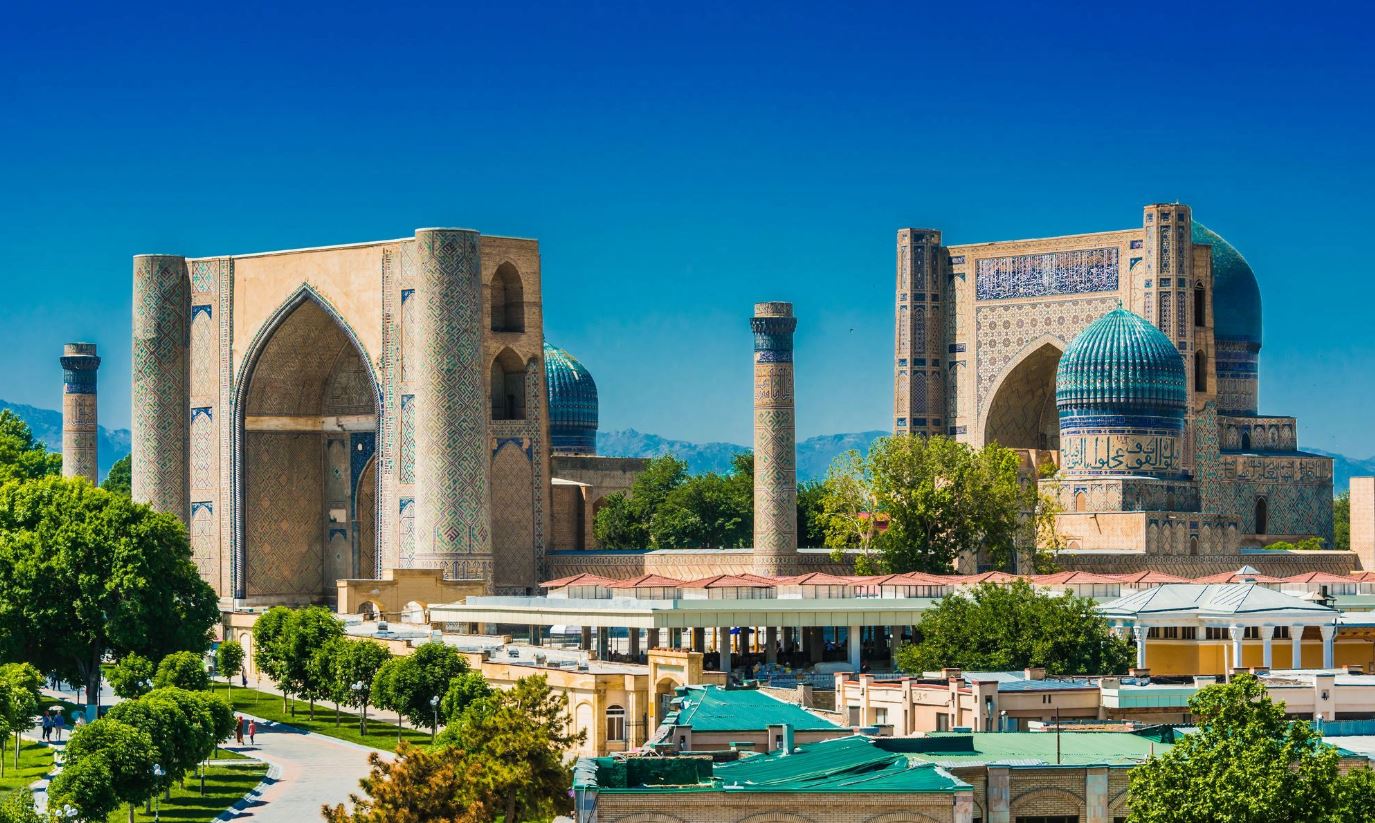
One of the largest and most ambitious religious buildings of the medieval world, built by Timur to rival the heavens.
 Living Samarkand
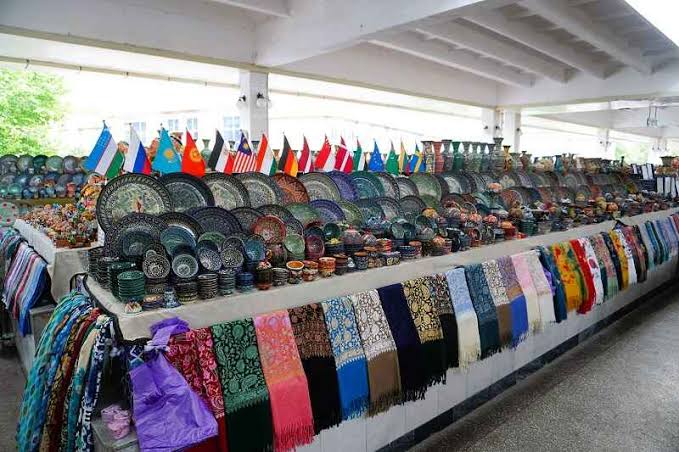
Central Asia’s most vibrant covered trading bazaar: stacks of golden Samarkand bread, dried apricots, mountain honey, and mountain spices.
Looking for something beyond this monument? Discover a completely different historical or natural dimension of the region.
The birthplace of Samarkand: an undulating 200-hectare archaeological hill preserving 2,500 years of Sogdian, Persian, and Hellenistic urban history.
A tranquil riverside mill where the ancient art of making silk-smooth, archival mulberry paper is kept alive using water-powered wooden hammers.
.jpg)
Include this landmark in a customized private or small-group journey combining ancient cities with Nuratau Mountain homestays.